
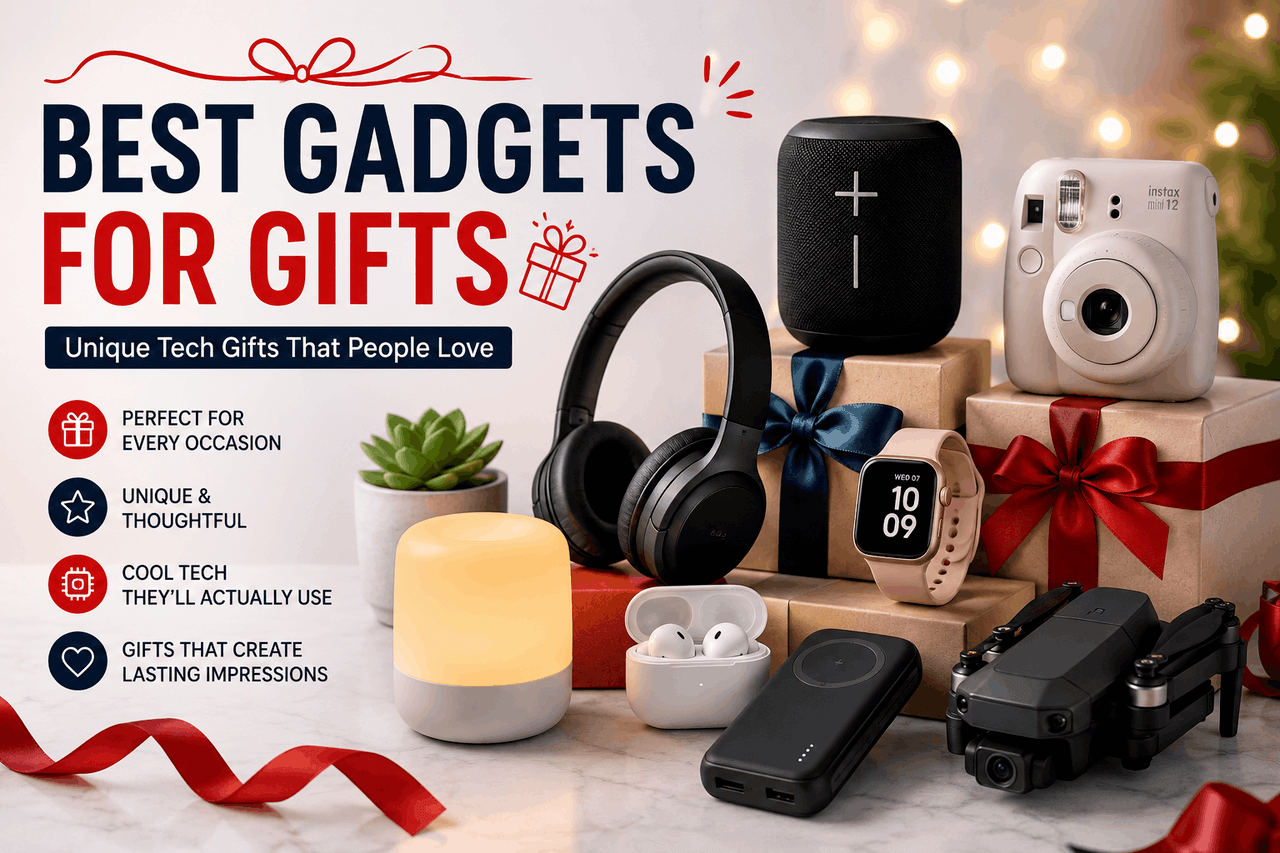
The best gadget gifts match the recipient’s specific daily habits and interests. Top choices include the Apple Watch Series 9 for health tracking, the Sony WH-1000XM5 headphones for frequent travellers, and the Kindle Paperwhite for home readers. Prioritise practical, high-use devices over temporary novelty items to ensure long-term value.
Finding the right gift can feel like solving a complex puzzle. Gadgets offer a reliable solution because they combine daily utility with an element of discovery. A well-chosen electronic device solves a specific problem or elevates a routine activity, making the choice feel more straightforward.
Technology gifts tend to be well-received because they integrate directly into how people already live. In fact, according to the Consumer Technology Association [2023], 72% of adults report wanting a technology product as a gift. The appeal lies in function. A quality gadget provides ongoing value for years after the box is opened.
The challenge is matching the right device to the right person. For example, a high-end drone will sit in a closet if given to someone who prefers staying indoors. Likewise, a complex smart home hub will frustrate a relative who prefers analog solutions. You need to align the hardware with the user.
What are the best gadget gifts for tech enthusiasts?
Tech enthusiasts are the early adopters. As a result, they want the newest standard, the fastest processor, and the most seamless integration. Giving gifts to this group requires looking at the current hardware generation.
Latest Smartphones and Wearables
Overview: These are the primary devices people interact with daily. The current generation includes the iPhone 15 Pro and the Samsung Galaxy S24 Ultra, alongside wearables like the Apple Watch Ultra 2.
Who is this for? These devices are for power users who rely on their phones for productivity, photography, and constant communication throughout the day.
Risks: High cost is the primary barrier. Flagship smartphones usually cost around $1,000 to $1,200. You also run the risk of buying outside their preferred ecosystem. An Android user will find an Apple Watch completely useless.
Rewards: You are providing a device they will use hundreds of times a day. Premium wearables offer advanced health metrics, including blood oxygen monitoring and ECG capabilities, which provide genuine utility.
Advanced Smart Home Devices
Overview: Smart home technology automates daily routines. This category includes devices like the Google Nest Learning Thermostat, the Philips Hue lighting system, and the Amazon Echo Show 10.
Who is this for? Smart home gadgets are ideal for homeowners who enjoy streamlining their environment and controlling their living space with voice commands or automated schedules.
Privacy concerns remain a factor for many users. For example, according to a Pew Research Centre survey [2022], 48% of smart speaker owners worry about the amount of data their devices collect. Compatibility is another issue. A Google Nest device will not integrate well with an entirely Apple HomeKit-based household.
Rewards: Smart thermostats can reduce heating and cooling bills by 10% to 12% annually. Smart lighting adds significant convenience and security by operating on customised schedules.
What are the top technology gifts for creative individuals?
Creative souls use technology as a medium. Therefore, they need tools that capture their vision accurately without getting in the way of the process.
High-Quality Cameras and Drones
Overview: This category covers everything from the mirrorless Sony A7 IV to consumer drones like the DJI Mini 4 Pro. These devices capture high-resolution images and stabilised 4K video.
Who is this for? Hobbyist photographers, aspiring filmmakers, and travelers who want to document artistic projects from unique perspectives.
Risks: The learning curve can be steep. A mirrorless camera requires an understanding of aperture, shutter speed, and ISO to be used effectively. Drones are subject to strict local aviation regulations and require registration if they weigh over 250 grams.
Rewards: These tools offer image quality that smartphones simply cannot match. A dedicated camera provides depth of field and low-light performance that elevate hobbyist photography into professional-grade art.
Digital Art Tablets and Accessories
Overview: Digital tablets like the iPad Pro, paired with an Apple Pencil, or dedicated drawing displays like the Wacom Cintiq 16, translate physical drawing motions into digital art.
Who is this for? Illustrators, graphic designers, and traditional artists looking to transition to a digital workflow.
Risks: Dedicated drawing tablets like Wacom displays must be connected to a computer to function, limiting portability. The iPad Pro is portable but starts at around $800, plus the additional $130 for the stylus.
Rewards: Digital art tools offer infinite undo states, layers, and custom brushes. They eliminate the ongoing cost of physical art supplies and make sharing and editing work completely frictionless.
Which smart devices are best for fitness fanatics?
Fitness gadgets quantify physical exertion. They turn subjective feelings of fatigue into objective data points that can be tracked and improved over time.
Smartwatches and Fitness Trackers
Overview: Wearables like the Garmin Forerunner 265, the Fitbit Charge 6, and the Whoop 4.0 band monitor heart rate, sleep quality, and exercise intensity.
Who is this for? Runners, cyclists, weightlifters, and anyone motivated by tracking physical progress and recovery metrics.
Risks: Data fatigue is real. Some users become overly fixated on their sleep scores or step counts, which can create anxiety rather than motivation. Devices like Whoop also require an ongoing monthly subscription fee of around $30.
Rewards: Accurate heart rate monitoring ensures users are training in the correct cardiovascular zones. GPS tracking maps running routes precisely, and advanced recovery algorithms tell users when to push hard and when to rest.
Portable Workout Equipment
Overview: Smart workout equipment includes devices like the Theragun Pro percussive massager and the Tangram Smart Jump Rope.
Who is this for? Athletes who travel frequently or people who prefer working out and recovering at home rather than going to a commercial gym.
Risks: Percussive massagers can be loud and heavy, making them cumbersome to pack. Smart jump ropes require the user to have enough clear indoor or outdoor space to use them effectively.
Rewards: The Theragun Pro accelerates muscle recovery and reduces delayed onset muscle soreness. A smart jump rope accurately counts skips and calories burned, turning a basic cardiovascular exercise into a gamified challenge.
What are the best electronics for homebodies?
Homebodies view their living space as a sanctuary. Therefore, gadgets for this group should enhance comfort, provide immersive entertainment, and reduce the friction of household chores.
Entertainment Gadgets
Overview: This segment includes home theater components like the Sonos Arc soundbar, the Nebula Capsule 3 portable projector, and the Apple TV 4K streaming box.
Who is this for? Movie enthusiasts, binge-watchers, and people who prefer hosting movie nights over going to a crowded theater.
Risks: Soundbars and audio equipment often require a specific room layout to bounce sound correctly for spatial audio effects. Projectors demand a dark room and a clear, flat, white wall or a dedicated screen to look their best.
Rewards: A premium soundbar upgrades a television’s flat audio into immersive, room-filling sound. The Apple TV 4K organizes scattered streaming subscriptions into one fast, ad-free interface.
Comfort and Convenience Devices
Overview: These are automated helpers. The iRobot Roomba j7+ and the Ember Temperature Control Smart Mug fall into this category.
Who is this for? Busy professionals, parents, and anyone who prefers to delegate repetitive daily tasks to machines.
Risks: Robot vacuums struggle with high-pile carpets and can get tangled in stray charging cables. The Ember Mug requires daily charging and holds less coffee than a standard ceramic mug.
Rewards: The Roomba j7+ automatically empties its own dustbin and navigates around pet waste, keeping floors clean with zero daily effort. The Ember Mug keeps coffee at an exact 135 degrees Fahrenheit for hours, eliminating the need for microwave trips.
Which portable gadgets are essential for travelers?
Travel tech needs to be durable, lightweight, and capable of solving the specific annoyances of transit. With that in mind, the most useful options are designed to handle charging, noise, and convenience on the move.
Portable Power Banks and Adapters
Overview: Devices like the Anker Prime Power Bank and the EPICKA Universal Travel Adapter keep electronics charged away from wall outlets.
Who is this for? Frequent flyers, digital nomads, and outdoor enthusiasts who spend long days away from a reliable power grid.
Risks: High-capacity power banks are heavy, adding significant weight to a backpack. Power banks over 27,000 mAh (100Wh) are often restricted by airline regulations and cannot be brought on commercial flights.
Rewards: A high-capacity Anker power bank can charge an iPhone five times over or fully charge a laptop on a long flight. Universal adapters ensure you can plug in anywhere in the world without carrying multiple localized plugs.
Noise-Canceling Headphones and Travel Tech
Overview: Over-ear headphones like the Sony WH-1000XM5 and the Bose QuietComfort Ultra use microphones to invert and cancel out ambient noise.
Who is this for? Commuters, office workers in open-plan spaces, and people who regularly endure the roar of an airplane cabin.
Risks: Premium noise-canceling headphones are expensive, generally costing around $350 to $400. They are also bulky to pack compared to true wireless earbuds like the Apple AirPods Pro.
Rewards: Active noise cancellation dramatically reduces listener fatigue on long flights by silencing engine noise. These headphones also feature excellent microphones for taking clear phone calls in noisy environments.
How should you choose the perfect gadget gift for someone?
Selecting the right device requires a structured approach. You need to move past the marketing specifications and look at the recipient’s daily reality.
First, consider the recipient’s hobbies and interests. If they enjoy reading, a Kindle Paperwhite is a better gift than a generic Android tablet. The tablet does more, but the Kindle does one specific thing perfectly. According to the National Retail Federation [2023], gifts that align with a known hobby have a 40% lower return rate.
Second, set a firm budget. Technology spans a massive price spectrum. You can buy a great smart speaker for $50, or you can spend $2,500 on a laptop. Decide what you are willing to spend before you start looking at features. This prevents scope creep.
Third, read reviews from verified owners and independent testing sites. Focus heavily on the negative reviews to understand the device’s actual flaws. Every product has a downside. You need to decide if that downside is a dealbreaker for the person receiving the gift.
Finally, think about practicality and longevity. Ask yourself if the person will still be using this device in six months. A high-quality power bank lacks the immediate excitement of a virtual reality headset, but the recipient will use the power bank every time they travel for the next five years.
Where is the best place to buy electronic gifts?
Once you identify the right gadget, you have to decide where to purchase it. Both online and physical retail offer distinct advantages.
Benefits of Online Shopping
Shopping online at retailers like Amazon, B&H Photo, or directly from the manufacturer offers the widest selection and the ability to compare prices instantly. You can easily find previous-generation models, which are often heavily discounted. Online shopping also makes it simple to ship the gift directly to a relative who lives in another state. Be aware that online shopping requires you to factor in shipping times, and dealing with mail-in returns can be frustrating if the device is defective.
Advantages of In-Store Purchases
Buying from physical locations like Best Buy or an Apple Store allows you to see and hold the device before committing to it. You can gauge the weight of a camera or test the comfort of a pair of headphones. In-store shopping provides immediate possession, which is crucial for last-minute gifts. Returning a product is also much simpler. The recipient can simply drive to the local store and hand the item to a customer service representative for an immediate refund or exchange.
Closing Thoughts on Gadget Gifting
The best electronic gifts are the ones that quietly improve the recipient’s daily life. A smart thermostat saves them money. A noise-canceling headset gives them peace on a loud commute. A fitness tracker gives them clarity on their health.
When you focus on the user rather than the technology, you are much more likely to choose a successful gift. Start by observing the small frustrations in their daily routine, then find the hardware designed specifically to solve that problem.
Frequently Asked Questions (FAQ)
What is a good budget for a high-quality gadget gift?
You should expect to spend between $100 and $300 for a quality mid-tier gadget like a Kindle, a smart home hub, or premium earbuds. Flagship items like smartphones, advanced drones, or premium tablets typically start around $800.
Are refurbished electronics safe to buy as gifts?
Refurbished electronics are safe if you buy them directly from the manufacturer or a certified refurbisher. Companies like Apple and Samsung replace the outer shells and batteries of their refurbished units and offer the same one-year warranty as new products.
How do I know if a smart home device will work with their current setup?
You need to find out which voice assistant they currently use. Choose devices labeled “Works with Apple HomeKit” if they use iPhones and HomePods, “Works with Alexa” for Amazon Echo users, or “Works with Google Assistant” for Google Nest users. Devices supporting the “Matter” protocol will work across all major platforms.
What is the most universally useful tech gift for someone hard to shop for?
A high-capacity portable power bank from a reputable brand like Anker or a premium Bluetooth tracker like an Apple AirTag or Tile Mate. Everyone uses a smartphone that eventually runs out of battery, and everyone occasionally misplaces their keys.