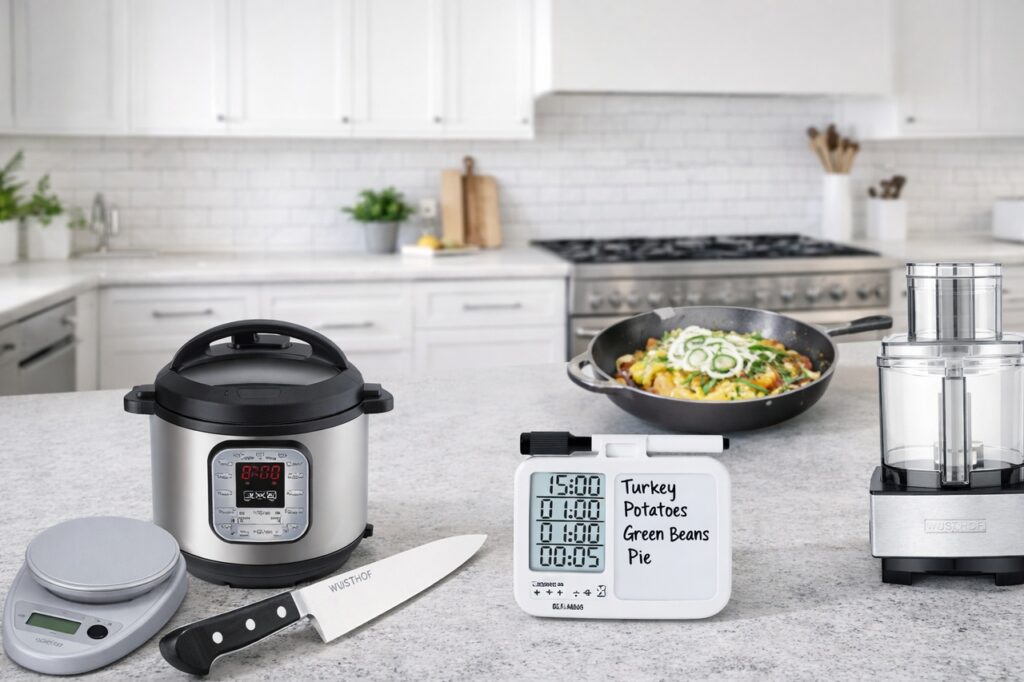
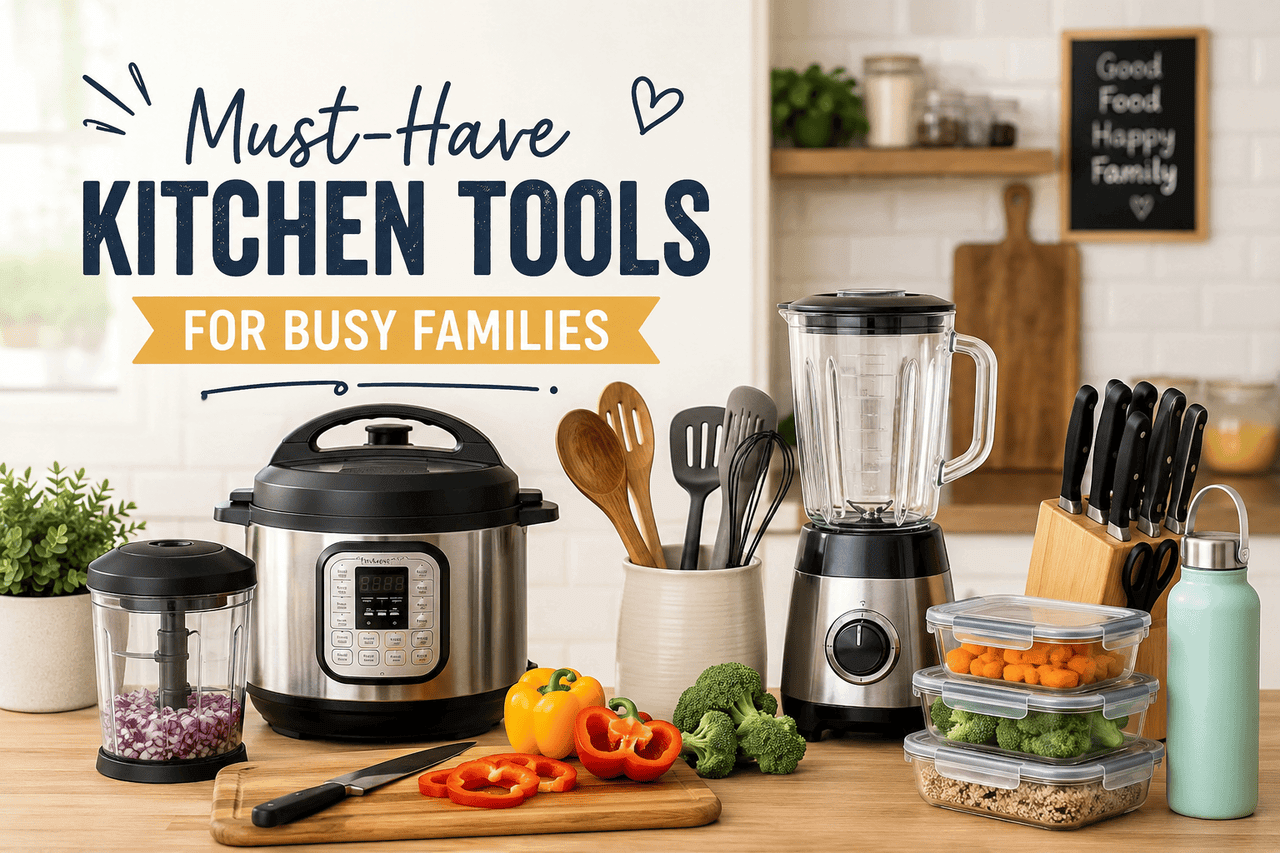
The most essential kitchen tools for busy families include time-saving appliances like the Instant Pot, air fryer, and food processor. Versatile cookware like Dutch ovens and sheet pans, paired with smart storage containers, reduces cooking and cleanup time. Choose multi-purpose gadgets to streamline daily meal preparation and reduce stress.
Cooking for a family often feels like managing a small restaurant. You face strict time constraints, varying dietary preferences, and the constant pressure of a ticking clock. When you walk through the door at 5:30 PM, the demand for dinner is immediate. Relying on takeout is expensive and often lacks the nutritional value you want for your family.
Efficiency is the difference between a stressful evening and a relaxed one. The right equipment transforms a chaotic kitchen into a functional workspace. You do not need a commercial kitchen to produce fast, healthy meals. You simply need reliable tools that handle the heavy lifting.
When you equip your kitchen strategically, you reclaim hours of your week. A single appliance that handles chopping, or a pot that cooks a roast in under an hour, changes your entire evening routine. The goal is to minimize active preparation time and reduce the number of dishes you have to wash.
What are the best time-saving appliances for family meals?
In the world of kitchen equipment, countertop appliances are the heavy machinery. They automate processes that would otherwise keep you tethered to the stove.
How does an Instant Pot or pressure cooker speed up dinner?
An Instant Pot uses trapped steam to cook food at high temperatures. It reduces cooking times by as much as 70 percent compared to traditional methods.
Overview: The Instant Pot functions as a pressure cooker, slow cooker, rice cooker, and steamer in one unit.
Who is this for: You will want to consider this if you frequently forget to defrost meat or need to cook tough cuts of beef and dried beans quickly.
Trade-offs: The machine requires a learning curve, and the steam release valve can be intimidating at first. It also occupies a significant amount of cabinet space.
When should you use a slow cooker instead?
A slow cooker relies on low, steady heat over a period of six to eight hours. It is the ultimate hands-off cooking method.
Overview: You place ingredients in the ceramic crock in the morning, set the dial, and return home to a fully cooked meal.
Who is this for: This is ideal for families with staggered schedules or those who prefer to do their meal preparation in the morning.
Trade-offs: Slow cookers excel at soups, stews, and pulled meats, but they do not brown or crisp food. Meals can sometimes take on a uniform texture if you do not add fresh ingredients at the end.
Why are air fryers better for quick, healthy alternatives?
Air fryers are essentially compact convection ovens. They circulate hot air rapidly around your food to create a crispy exterior with very little oil.
Overview: These machines cook everything from frozen chicken tenders to fresh vegetables in a fraction of the time a traditional oven requires.
Who is this for: This tool is perfect for parents who want to recreate the texture of fried foods without the heavy oil content, or those who need to reheat leftovers quickly.
Trade-offs: The basket size limits how much food you can cook at once. If you are cooking for a family of five, you will likely need to cook in batches, which adds time back to the process.
How much time does a food processor really save?
A food processor automates the most tedious part of cooking: the chopping, slicing, and dicing.
Overview: With various blade attachments, this machine can grate a block of cheese in ten seconds or puree a batch of hummus in a minute.
Who is this for: You will find this invaluable if you cook with a lot of fresh vegetables or prefer to make your own sauces and doughs.
Trade-offs: Food processors are bulky and involve multiple parts that require careful cleaning. If you only need to chop a single onion, washing the machine takes longer than using a knife.
What makes a high-quality blender worth the investment?
A high-powered blender pulverizes ingredients into smooth liquids. A premium model usually costs around $300 to $500, but it handles tasks that cheaper models cannot.
Overview: High-quality blenders create silky smoothies, blend hot soups directly in the pitcher, and even grind grains into flour.
Who is this for: This is a wise purchase if your family consumes a lot of smoothies, pureed soups, or homemade nut butters.
Trade-offs: Premium blenders are loud and require a tall clearance space on your counter.
Which smart storage solutions keep food fresh longer?
Cooking efficiently requires storing food effectively. Good storage reduces food waste and makes grabbing a quick meal easy.
How do meal prep containers improve weekly organization?
Uniform meal prep containers allow you to portion out meals in advance. They stack neatly in the refrigerator and move easily to the microwave.
Overview: Glass or BPA-free plastic containers with tight-fitting lids keep oxygen out and moisture in.
Who is this for: You need these if you dedicate a few hours on Sunday to cooking for the week ahead.
Trade-offs: Glass containers are heavy and can break, while plastic containers can stain or absorb odors from foods like tomato sauce.
Are reusable bags and wraps a practical choice?
Silicone storage bags and beeswax wraps replace single-use plastics. They offer a sustainable way to store snacks and half-used vegetables.
Overview: Silicone bags can be boiled, microwaved, and frozen. Beeswax wraps mold to the shape of bowls or produce using the warmth of your hands.
Who is this for: Families looking to reduce their household waste and long-term spending on disposable plastics will benefit most.
Trade-offs: Silicone bags require careful drying to prevent mold, and beeswax wraps cannot be washed in hot water or used for raw meat.
How can pantry organizers maximize your space?
Clear bins, tiered shelves, and lazy Susans bring order to dark pantry shelves. When you can see your ingredients, you avoid buying duplicates.
Overview: These organizing tools group similar items together and bring items from the back of the shelf to the front.
Who is this for: Anyone who struggles to find specific spices or frequently discovers expired canned goods hiding in the back of the pantry.
Trade-offs: Measuring your shelves and buying matching bins requires an upfront investment of both time and money.
What versatile cookware do you actually need?
You do not need a twenty-piece cookware set. You need a few reliable pieces that perform multiple functions well.
Why are quality non-stick pans essential for quick cleanup?
A good non-stick skillet prevents delicate foods like eggs and fish from tearing, and it wipes clean with a sponge.
Overview: Modern non-stick coatings allow you to cook with minimal butter or oil without food bonding to the metal.
Who is this for: You will use this daily for quick breakfasts, grilled cheese sandwiches, and simple stir-fries.
Trade-offs: Non-stick coatings eventually wear out, typically lasting only three to five years. You cannot use metal utensils on them or heat them to extremely high temperatures.
How do sheet pans simplify weeknight dinners?
Heavy-duty aluminum sheet pans are the foundation of the one-pan meal. You toss protein and vegetables in olive oil, spread them out, and let the oven do the work.
Overview: A rimmed baking sheet conducts heat evenly and provides enough surface area for ingredients to roast rather than steam.
Who is this for: This is perfect for the cook who wants to minimize dishwashing to a single pan.
Trade-offs: Aluminum pans will warp if exposed to sudden temperature changes, and they require hand-washing to maintain their finish.
Is a Dutch oven worth the heavy lifting?
A cast-iron Dutch oven coated in enamel is a workhorse. It moves seamlessly from the stovetop to the oven to the dining table.
Overview: These heavy pots retain heat exceptionally well, making them ideal for slow-simmering stews, braising meats, or baking crusty bread.
Who is this for: You will want a Dutch oven if you regularly cook large batches of chili, soup, or slow-cooked roasts.
Trade-offs: Dutch ovens are very heavy, often weighing over ten pounds when empty. Premium brands can cost hundreds of dollars.
Which handy gadgets and utensils speed up prep work?
Small tools make a significant impact when they solve specific, repetitive problems in the kitchen.
Why use a mandoline slicer for uniform vegetable cuts?
A mandoline features a sharp, stationary blade that slices vegetables precisely as you slide them across the surface.
Overview: This tool produces perfectly even slices of potatoes, carrots, or cucumbers in seconds.
Who is this for: You should use this if you frequently make gratins, slaws, or large salads.
Trade-offs: The exposed blade is extremely dangerous. You must always use the included hand guard to prevent serious cuts.
Does a garlic press really save that much effort?
A garlic press forces a clove of garlic through a grid of small holes, mincing it instantly.
Overview: You can crush a clove of garlic without peeling it first, leaving the skin behind in the chamber.
Who is this for: This is for the cook who uses fresh garlic regularly but hates the lingering smell on their fingers.
Trade-offs: Some chefs argue that a press alters the flavor of the garlic. The small holes also require immediate cleaning to prevent dried garlic from getting stuck.
How do kitchen shears replace multiple other tools?
A pair of heavy-duty kitchen shears is often faster and safer than a knife for specific tasks.
Overview: You can use shears to trim poultry, snip fresh herbs directly into a pot, or cut pizza into slices.
Who is this for: Every kitchen needs a pair of shears for opening tough packaging and quick snipping tasks.
Trade-offs: Shears must be taken apart to be cleaned properly, especially after coming into contact with raw meat.
Why is a digital meat thermometer a safety necessity?
A digital instant-read thermometer takes the guesswork out of cooking meat. It ensures your food is safe to eat without overcooking it to a dry, unpalatable texture.
Overview: You insert the probe into the thickest part of the meat, and it registers the internal temperature in under three seconds.
Who is this for: Anyone who cooks chicken, pork, or beef needs this to prevent foodborne illness and guarantee tender results.
Trade-offs: You must remember to calibrate the thermometer occasionally, and you cannot leave an instant-read model in the meat while it cooks.
How do high-quality chef’s knives improve kitchen efficiency?
A sharp, well-balanced eight-inch chef’s knife is the single most important tool in your kitchen.
Overview: A quality knife slices cleanly through tomatoes, chops dense root vegetables safely, and rocks back and forth for fine mincing.
Who is this for: Every person who prepares food needs one excellent knife rather than a block of mediocre ones.
Trade-offs: Good knives require regular honing and occasional professional sharpening. They should never be placed in the dishwasher.
How should you build and maintain your kitchen tool collection?
Acquiring kitchen tools should be a deliberate process. Buying everything at once is overwhelming and expensive.
Which tools should you buy first?
Start with the tools you will use every single day. A sharp chef’s knife, a large cutting board, and a reliable non-stick skillet form the foundation of your kitchen. Once you master the basics, add appliances based on your specific pain points. If mornings are chaotic, buy a high-quality blender. If evenings are rushed, invest in an Instant Pot.
What is the best way to maintain and extend the life of your tools?
Proper maintenance saves you money. Wash your good knives by hand and dry them immediately to prevent rust. Oil your wooden cutting boards once a month to prevent cracking. Descale your appliances, like coffee makers and electric kettles, every few months to keep them running efficiently.
What are some reliable recipes tailored for these tools?
Use your Instant Pot for a thirty-minute chicken taco filling. Toss frozen chicken breasts, salsa, and taco seasoning into the pot, and shred the meat when done. Use your sheet pan for a roasted sausage and root vegetable medley. Use your slow cooker for a large batch of vegetarian black bean chili that yields leftovers for the rest of the week.
How can you create a family-friendly kitchen environment beyond the tools?
The best tools function best in an environment designed for collaboration and ease.
What is the best way to involve children in meal prep?
Children are more likely to eat food they help prepare. Give them safe, age-appropriate tasks. A five-year-old can tear lettuce for a salad or wash vegetables in the sink. A ten-year-old can use a vegetable peeler or measure dry ingredients for baking.
How should you organize tools for quick access?
Store tools exactly where you use them. Keep wooden spoons and spatulas in a crock next to the stove. Store baking sheets in the cabinet directly below the oven. Put your heavy food processor on the counter if you use it weekly, but relegate the stand mixer to the pantry if you only bake once a month.
Why does prioritizing shared meals matter?
The ultimate purpose of saving time in the kitchen is spending more time at the table. Shared meals provide a predictable anchor in a busy day. When the cooking process is streamlined, you arrive at the table with the energy to actually engage in conversation with your family.
Master Your Family’s Kitchen Routine
The transition from a stressful kitchen to an efficient one does not happen overnight. It requires identifying the bottlenecks in your routine and applying the right tool to solve the problem. An air fryer will not chop your vegetables, and a food processor will not cook your chicken. But when you build a collection of reliable, versatile tools, you eliminate the friction of daily cooking.
Assess your current kitchen setup this week. Note which tasks take the longest and which meals cause the most stress. Invest in one tool that addresses that specific challenge. You will quickly find that cooking becomes less of a chore and more of an organized, manageable process.
FAQs About Kitchen Tools for Families
What is the single most important appliance for a family on a tight schedule?
The pressure cooker (like an Instant Pot) offers the highest return on investment for tight schedules. It allows you to cook proteins and grains in a fraction of the traditional time, even if you forget to thaw meat beforehand.
How much should I expect to spend on a good chef’s knife?
A reliable, high-quality chef’s knife typically costs between $80 and $150. Brands like Victorinox offer excellent entry-level options around $40, while premium forged knives from Wüsthof or Mac cost over $100.
Are glass meal prep containers safer than plastic?
Glass containers do not absorb stains or odors, and they do not leach chemicals into food when heated in the microwave. They are generally considered safer and more durable over the long term, though they are heavier and prone to breaking if dropped.
Can an air fryer replace my microwave?
An air fryer cannot replace a microwave for heating liquids, melting butter, or reheating meals that require steam. However, an air fryer is vastly superior for reheating pizza, fries, or breaded meats, as it restores their crispy texture.
How do I clean a cast-iron Dutch oven without ruining the enamel?
Allow the pot to cool completely before washing it with warm water, mild dish soap, and a non-abrasive sponge. Stubborn, stuck-on food can be removed by boiling water and baking soda in the pot for ten minutes before wiping it clean.