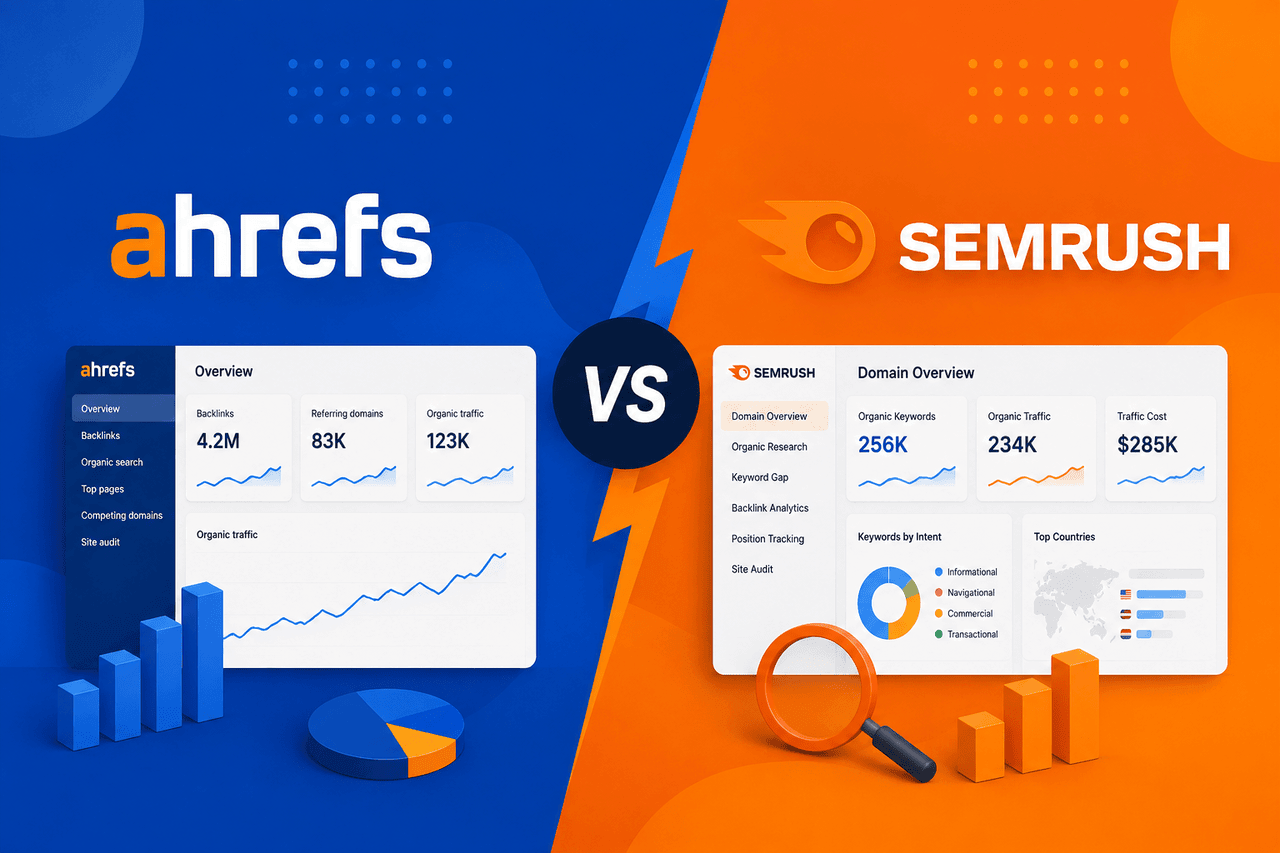
Choose Ahrefs if your primary focus is backlink analysis and content research, as it offers a highly accurate backlink database. Choose SEMrush if you need an all-in-one digital marketing suite that handles pay-per-click (PPC) advertising, social media management, and local SEO alongside organic search data.
In digital marketing, data is your compass. Without accurate data, your marketing strategy relies on guesswork. Search engine optimization (SEO) tools provide the concrete metrics you need to understand what your target audience is searching for and how your competitors are acquiring traffic. Two platforms dominate this space: Ahrefs and SEMrush.
Ahrefs started as a backlink analysis tool and evolved into a comprehensive SEO platform. SEMrush began as a keyword research tool and expanded into a full digital marketing suite. Both tools cost around $130 per month for their entry-level plans. Both offer massive databases of search queries and backlinks. But they organize and present this data differently, serving different types of marketers.
This guide breaks down exactly how Ahrefs and SEMrush compare. You will see how their specific features stack up, where each platform excels, and which limitations you need to be aware of before committing your marketing budget.
Deep dive into Ahrefs
Ahrefs is the specialist. It focuses heavily on organic search data, backlink profiles, and content performance. If Ahrefs were a physical tool, it would be a high-end scalpel. It does a specific set of jobs with incredible precision.
What are the key features of Ahrefs?
Site Explorer: This feature allows you to analyze the organic search traffic and backlink profile of any website or URL. You simply enter a domain, and Ahrefs shows you exactly which keywords bring traffic to that site and which external websites link to it.
Keywords Explorer: This tool helps you discover new keyword ideas and gauge their ranking difficulty. Ahrefs processes billions of searches across 10 search engines, including Google, YouTube, and Amazon. It provides a specific “Keyword Difficulty” score from 0 to 100, which estimates how many backlinks you need to rank on the first page of Google.
Content Explorer: This acts as a search engine for web content. You enter a topic, and Ahrefs finds the most popular articles based on social shares, organic traffic, and referring domains. This helps you identify content gaps in your own strategy by seeing what performs well for your competitors.
Site Audit: This crawler scans your website for technical SEO issues. It checks for broken links, missing meta tags, and slow page speeds. It then provides an overall “Health Score” so you can track improvements over time.
What are the main strengths of Ahrefs?
Backlink data accuracy: Ahrefs operates one of the most active web crawlers in the world. Their backlink database is notoriously comprehensive, making it the industry standard for link-building campaigns.
User-friendly interface: The dashboard is clean and logical. Data is presented in clear, readable graphs. You can usually find the metric you need in just a few clicks, making the learning curve relatively gentle for new users.
Content research: The Content Explorer is unmatched for finding linkable topic ideas. It allows content creators to reverse-engineer successful articles and build better versions.
What are the limitations of Ahrefs?
Strict usage limits: Ahrefs recently changed its pricing structure to charge based on “credits.” Almost every action you take inside the platform consumes a credit. Heavy users often find themselves hitting their monthly limits quickly, which requires purchasing add-ons.
Limited non-SEO features: Ahrefs focuses strictly on organic search. It offers very little data for PPC advertising and no tools for social media scheduling or local business listings.
Deep dive into SEMrush
SEMrush is the generalist. It aims to be the only software you need to run an entire digital marketing campaign. If Ahrefs is the scalpel, SEMrush is the Swiss Army knife. It offers dozens of tools covering organic search, paid advertising, and social media.
What are the key features of SEMrush?
Domain Overview: Similar to Ahrefs’ Site Explorer, this gives you a high-level view of a website’s digital presence. The key difference is that SEMrush displays organic search data alongside paid search traffic side-by-side.
Keyword Magic Tool: This is a massive database for keyword research. You enter a seed keyword, and SEMrush generates millions of related terms organized by search intent (Informational, Navigational, Commercial, Transactional). This intent categorization is highly valuable for planning a marketing funnel.
On-Page SEO Checker: This tool analyzes your existing web pages and offers specific recommendations to improve their rankings. It suggests missing keywords, identifies readability issues, and compares your page against the top 10 competitors for your target query.
Position Tracking: SEMrush tracks your website’s daily ranking for target keywords. It shows your visibility trends over time and alerts you if you drop out of the top spots.
Content Marketing Platform: This suite includes tools for content ideation, creation, and optimization. The SEO Writing Assistant plugins allow you to optimize content in real-time within Google Docs or WordPress.
What are the main strengths of SEMrush?
All-in-one marketing suite: SEMrush eliminates the need to buy separate tools for different marketing channels. You can manage your SEO, plan your Google Ads budget, and schedule Twitter posts from the same dashboard.
PPC and advertising research: SEMrush excels at uncovering competitor ad strategies. You can see exactly which keywords your competitors bid on, how much they spend, and what their ad copy looks like.
Local SEO capabilities: SEMrush offers dedicated tools for managing local business listings and tracking map rankings, which are essential for brick-and-mortar businesses.
What are the limitations of SEMrush?
Cluttered interface: Because SEMrush offers so many tools, the navigation menu can feel overwhelming. New users often need weeks to understand where everything is located and how the different reports connect.
Backlink data precision: While SEMrush has vastly improved its backlink database in recent years, many SEO professionals still find Ahrefs to be slightly faster at discovering new links and more accurate at identifying dead ones.
Head-to-head comparison: Ahrefs vs SEMrush
To make a confident decision, you need to see how these platforms compare across specific daily workflows.
How do their keyword research tools compare?
Both platforms provide reliable search volume estimates and keyword difficulty scores. SEMrush pulls ahead for marketing agencies because of its Keyword Magic Tool, which automatically filters keywords by search intent. This saves hours of manual sorting. Ahrefs, however, provides better data for search engines outside of Google, such as YouTube and Amazon. Choose Ahrefs if you do video SEO. Choose SEMrush if you need intent-based filtering.
Which platform is better for backlink analysis?
Ahrefs wins this category. The Ahrefs Site Explorer is faster at finding new backlinks and provides a more intuitive view of a competitor’s link profile. SEMrush’s Backlink Analytics tool is highly capable, but Ahrefs remains the gold standard for dedicated link builders.
How do their site audit capabilities compare?
Both tools crawl your website and flag technical errors. SEMrush organizes these errors into a clear list of priorities, telling you exactly what to fix first to see the biggest impact. Ahrefs provides a more flexible Data Explorer, allowing technical SEO specialists to create custom filters for highly specific issues. SEMrush is better for general marketers, while Ahrefs appeals to deeply technical SEOs.
Which platform offers better content marketing features?
SEMrush provides a more actionable content workflow. Its SEO Writing Assistant grades your text as you write, ensuring you hit the right word count and include necessary secondary keywords. Ahrefs’ Content Explorer is better for the initial research phase of finding popular topics, but it lacks the direct writing assistance that SEMrush provides.
How do their pricing and plans compare?
Both tools start at approximately $130 per month. The main difference lies in how they limit your usage. SEMrush limits the number of projects you can create and the number of keywords you can track daily. Ahrefs uses a credit system, where almost every click consumes a credit. For users who need to run hundreds of different reports a day, SEMrush usually provides better value. For users who only monitor a few specific websites, Ahrefs’ credit system is manageable.
Use cases: Who should choose which tool?
Your choice depends entirely on your business model and your daily tasks.
Who should choose Ahrefs?
Ahrefs is the right choice for SEO specialists, niche site operators, and content creators who focus entirely on organic growth. If your daily routine involves analyzing competitor backlinks, researching content gaps, and doing technical website audits, Ahrefs provides a cleaner, more focused experience. It is the preferred tool for pure SEO professionals who do not run paid ads.
Who should choose SEMrush?
SEMrush is the right choice for digital marketing agencies, in-house marketing teams, and businesses running multi-channel campaigns. If you need to manage Google Ads, track local SEO rankings, schedule social media content, and monitor organic search, SEMrush consolidates all those tasks into one subscription. It is an excellent choice for a marketing director who needs a holistic view of a company’s entire digital footprint.
Final recommendation
Ahrefs and SEMrush are both exceptional tools. You cannot make a wrong choice, but you can make a less optimal one.
To recap: Ahrefs offers the best backlink analysis and a highly intuitive interface for organic search research. SEMrush offers a comprehensive suite of tools that covers SEO, PPC, and content optimization in one package.
If your marketing strategy relies on link building and deep organic research, subscribe to Ahrefs. If your marketing strategy relies on a mix of paid advertising, local search, and content creation, subscribe to SEMrush.
As search engines continue to integrate artificial intelligence into their results, both platforms are rapidly updating their features to track AI-generated summaries and zero-click searches. Whichever platform you choose, you will have the data necessary to adapt to the future of search.
FAQs on Ahrefs vs SEMrush
Which tool is easier for beginners, Ahrefs or SEMrush?
Ahrefs tends to be easier for beginners. Its interface is less cluttered because it focuses strictly on SEO, whereas SEMrush’s vast array of multi-channel marketing tools can overwhelm new users.
Can I use both Ahrefs and SEMrush for free?
Neither tool offers a permanent, full-featured free plan. SEMrush offers a limited free account that restricts you to a few searches per day. Ahrefs offers a free tool called Ahrefs Webmaster Tools, which gives you limited access to data for a website you personally own, but you cannot use it to research competitors.
Are there cheaper alternatives to Ahrefs and SEMrush?
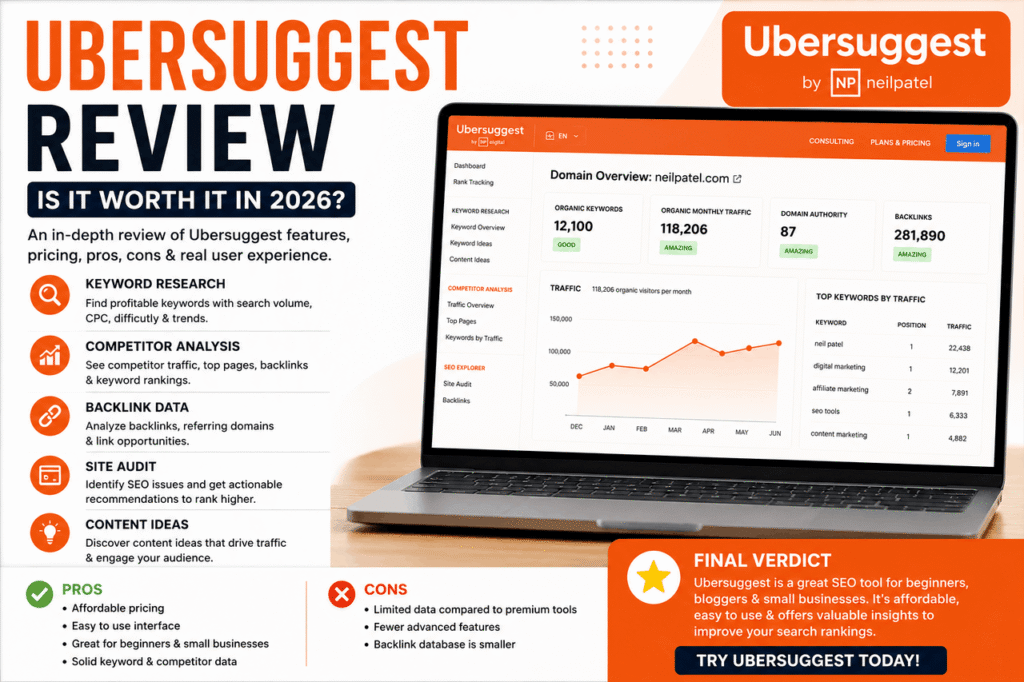
Yes. Tools like Mangools, SE Ranking, and Ubersuggest offer basic keyword research and rank tracking for roughly $30 to $50 per month. These alternatives are good for individuals on a tight budget, but they lack the massive data accuracy and advanced features of Ahrefs and SEMrush.
Which tool is better for tracking local SEO?
SEMrush is much better for local SEO. It includes specific tools for listing management, local rank tracking on Google Maps, and review monitoring, which Ahrefs does not offer.