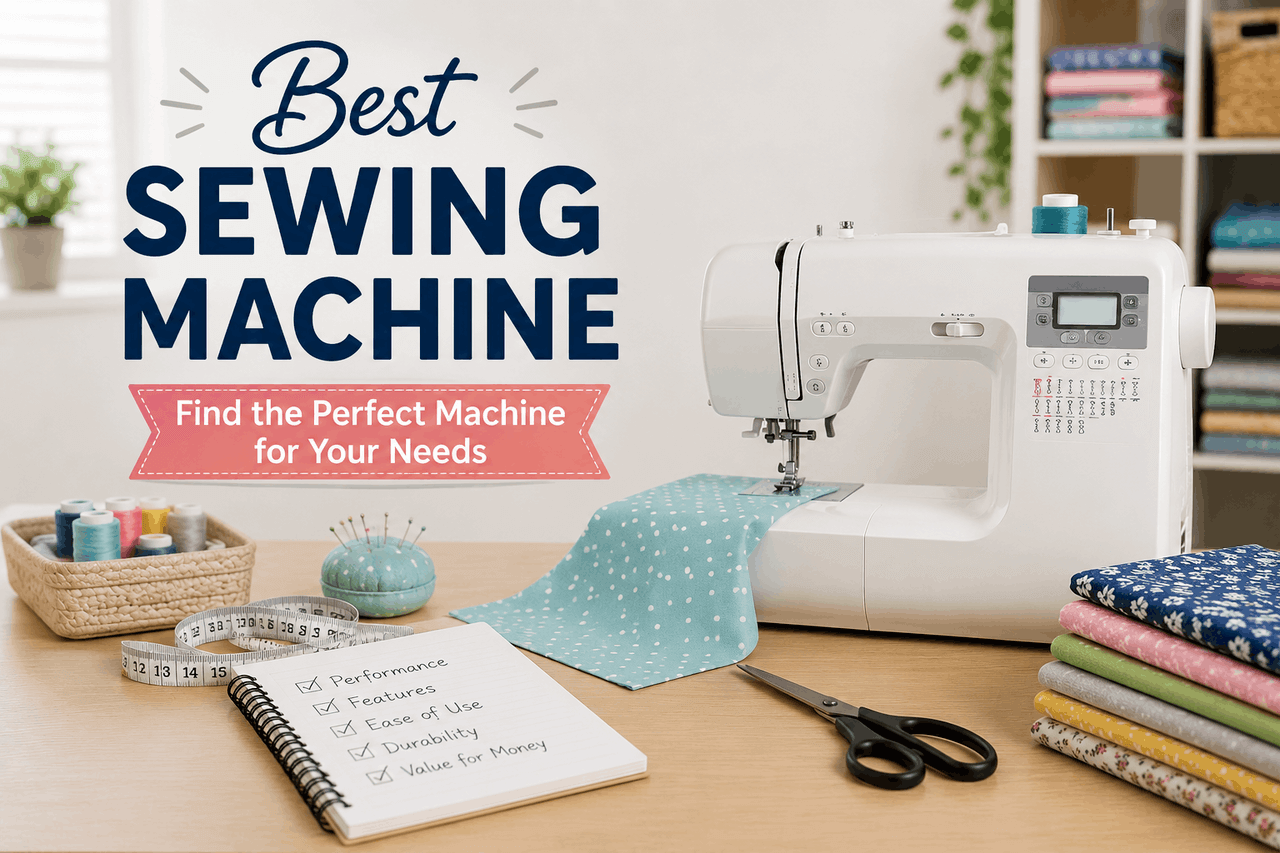
The best sewing machine depends on your skill level and project goals. Beginners should choose the Brother CS7000X for its ease of use, while intermediate users should choose the Janome HD1000 for its durability. Advanced sewists require heavy-duty models like the Juki TL-2000Qi for high-speed, professional-grade stitching.
A sewing machine is the engine of your creative workspace. It drives your fabric forward, turning loose threads and cut panels into functional garments, quilts, or home decor. Choosing the right sewing machine is a critical decision because it dictates what materials you can work with and how much frustration you will tolerate during the learning process. Buy a machine that is too simple, and you will outgrow it in a few months. Buy one that is too complex, and you might give up before you finish your first seam.
The history of these machines dates back to the early 19th century. Early models were entirely hand-cranked or treadle-powered, requiring significant physical effort. Today, the landscape is divided into three main categories. Mechanical sewing machines are the manual transmission cars of the sewing world. You control the tension and stitch length with physical dials. Electronic sewing machines add a motor and button controls, offering more consistent speed. Computerized sewing machines are the most advanced, featuring LCD screens, hundreds of built-in stitches, and automated tension adjustments.
Choosing the right equipment saves you time and money in the long run. A reliable sewing machine typically costs between $150 and $2,000, depending on its capabilities. If you understand your goals and constraints upfront, you can find a model that matches your current skills while leaving room for growth.
What key features should you look for in a sewing machine?
When evaluating a new sewing machine, you will want to look beyond the marketing materials and focus on the mechanics. The features that matter most are those that directly impact your daily workflow.
Which stitch types and options matter most?
Stitch variety can be deceptive. A computerized machine might offer 600 stitch options, but most people use only straight, zigzag, buttonhole, and blind hem stitches. If you sew garments, you need a machine that creates clean, consistent straight stitches and offers a reliable zigzag stitch for finishing raw edges. Choose a high stitch count if you plan to do decorative quilting or embroidery. Otherwise, focus on stitch quality over quantity.
How do presser feet impact your sewing projects?
Presser feet hold the fabric flat as it feeds through the machine. Different projects require different feet. A zipper foot lets you stitch closely to zipper teeth. A walking foot pulls multiple layers of fabric through the machine evenly, which is essential for quilting. Most beginner machines include an all-purpose foot, a zipper foot, and a buttonhole foot. You will want to verify that the machine accepts standard, universal presser feet so you can buy specialized attachments later without paying a premium for brand-specific parts.
Why do motor power and speed matter?
Motor power determines how well the machine punches through thick materials like denim, canvas, or leather. Speed is measured in stitches per minute (SPM). A standard domestic machine usually operates around 800 SPM. Heavy-duty or industrial machines can reach up to 1,500 SPM. If you plan to sew heavy winter coats or canvas bags, you need a machine with a strong motor and a metal interior frame. A weak motor will stall or break needles when forced through thick layers.
How do you evaluate durability and build quality?
Build quality dictates how long your machine will last and how quietly it will run. Machines with a full-metal frame are heavier but vibrate less at high speeds. This results in straighter seams and fewer skipped stitches. Plastic machines are highly portable and usually cost less, but they wear out faster and struggle with heavy fabrics. According to [The Sewing Institute, 2023], metal-frame machines have an average lifespan of 15 years, compared to just 5 years for all-plastic models.
Which automation features are worth the money?
Automation saves time and reduces eye strain. An automatic needle threader uses a small hook to pull the thread through the needle’s eye. An automatic thread cutter snips the top and bobbin threads at the push of a button. Computerized tension adjustment automatically regulates how tightly the threads lock together based on the fabric type. These features add to the machine’s initial cost, but they make the sewing process significantly smoother for users with poor eyesight or joint pain.
What are the top 5 best sewing machines for beginners?
Beginners need a machine that forgives mistakes. You want clear threading guides, simple drop-in bobbins, and a manageable top speed.
1. Brother CS7000X
Overview: A fully computerized machine that offers 70 built-in stitches and automatic threading.
Who is this for: New sewists who want a feature-rich machine that is easy to set up.
Risks: The lightweight plastic frame can shake slightly at maximum sewing speed.
Rewards: You get an automatic needle threader, a wide table for larger projects, and 10 included presser feet.
Ideal projects: Basic quilting, cotton garments, and simple home decor.
2. Singer Start 1304
Overview: A bare-bones mechanical machine with just 6 built-in stitches.
Who is this for: Complete novices or children learning the absolute basics of sewing.
Risks: It lacks adjustable stitch length and width, which limits your ability to customize seams.
Rewards: It weighs less than 10 pounds and usually costs under $150, making it highly accessible.
Ideal projects: Hemming pants, simple tote bags, and crafting.
3. Janome 2212
Overview: A reliable mechanical machine known for its straightforward dial controls and durable build.
Who is this for: Traditional learners who prefer physical dials over digital screens.
Risks: It uses a front-loading bobbin, which is slightly more difficult to thread than a top-loading drop-in bobbin.
Rewards: The analog construction is highly durable and very easy for a local technician to repair.
Ideal projects: Woven cotton dresses, pillowcases, and simple alterations.
4. Brother XR3774
Overview: A mid-sized mechanical machine featuring 37 stitches and a wide table attachment.
Who is this for: Beginners who want to try quilting but are not ready to invest in a computerized model.
Risks: The LED light is quite dim, so you may need an external desk lamp to see your workspace clearly.
Rewards: It features a one-step buttonhole, which takes the frustration out of sewing shirts and jackets.
Ideal projects: Throw quilts, button-down shirts, and basic apparel.
5. Singer Heavy Duty 4423
Overview: A mechanical machine with a metal frame and a motor that runs at 1,100 stitches per minute.
Who is this for: Beginners who plan to work with denim, canvas, or upholstery fabrics immediately.
Risks: The high speed can be intimidating for a new user, and the foot pedal is sensitive.
Rewards: It powers through multiple layers of heavy fabric without stalling or skipping stitches.
Ideal projects: Denim jeans, canvas tote bags, and outdoor cushion covers.
What are the top 5 best sewing machines for intermediate users?
Intermediate users have mastered the basics and need machines that offer greater precision, better feed-dog systems, and specialty stitches.
1. Janome HD1000
Overview: An aluminum-body mechanical machine designed for frequent, heavy use.
Who is this for: Intermediate sewists who want industrial-level durability in a domestic size.
Risks: It offers only 14 stitches, making it unsuitable for users who want to do decorative embroidery.
Rewards: The cast-aluminum body ensures zero vibration, resulting in perfectly straight topstitching.
Project ideas: Leather accessories, heavy winter coats, and tailored trousers.
2. Brother SE600
Overview: A combination sewing and embroidery machine with a full-color LCD touch screen.
Who is this for: Crafters who want to transition from basic construction to custom embroidery.
Risks: The embroidery field is limited to 4×4 inches, which restricts the size of your designs.
Rewards: You can import your own custom embroidery designs via a USB drive.
Project ideas: Monogrammed towels, custom patches, and embroidered denim jackets.
3. Singer Quantum Stylist 9960
Overview: A highly computerized machine boasting 600 built-in stitches and a digital stitch elongation feature.
Who is this for: Garment makers who want precise control over every aspect of their stitching.
Risks: The computerized motherboard can be expensive to replace if the machine suffers an electrical surge.
Rewards: It features an automatic thread cutter and an electronic autopilot mode, so you can sew without a foot pedal.
Project ideas: Formal wear, complex quilts, and tailored blouses.
4. Juki HZL-F600
Overview: A premium computerized machine that uses industrial box-feed technology for perfect fabric feeding.
Who is this for: Serious quilters and garment makers who demand flawless stitch quality on very thin and very thick fabrics.
Risks: It is a significant financial investment, typically costing over $1,000.
Rewards: The box-feed system prevents thin fabrics, such as silk, from puckering or slipping.
Project ideas: Silk evening gowns, large king-sized quilts, and stretch-knit activewear.
5. Bernette 35
Overview: A mechanical machine designed by the premium Swiss brand Bernina, offering 23 stitches.
Who is this for: Intermediate users who want European engineering and reliability on a mid-range budget.
Risks: It lacks modern conveniences, such as an automatic needle threader or a thread cutter.
Rewards: The mechanical components are exceptionally precise, resulting in a smooth, quiet sewing experience.
Project ideas: Tailored skirts, home upholstery, and intermediate patchwork.
What are the top 5 best sewing machines for advanced users?
Advanced users require high-speed, heavy-duty machines that can handle daily commercial use or highly specialized techniques.
1. Juki TL-2000Qi
Overview: A semi-industrial straight-stitch machine that operates at 1,500 stitches per minute.
Who is this for: Advanced quilters and professionals who need rapid, flawless straight stitching.
Risks: It only sews a straight stitch. It does not do zigzags or buttonholes.
Rewards: The speed and power are unmatched, and it includes an automatic thread trimmer and knee lifter.
Specialized projects: Professional machine quilting, commercial bag making, and high-volume garment production.
2. Janome Memory Craft 6650
Overview: A computerized machine with a 10-inch seamless flatbed and 170 built-in stitches.
Who is this for: Professional quilters who need massive throat space to maneuver bulky projects.
Risks: It is a very large and heavy machine, meaning it is not suitable for taking to sewing classes.
Rewards: The independent bobbin-winding motor lets you wind a new bobbin while you are still sewing.
Specialized projects: King-sized free-motion quilting and complex textile art.
3. Brother PQ1500SL
Overview: A high-speed straight-stitch machine featuring a pin-feed mechanism for challenging fabrics.
Who is this for: Tailors and dressmakers working with difficult materials like velvet or slippery linings.
Risks: Like the Juki TL-2000Qi, it only performs a straight stitch.
Rewards: The unique pin-feed system prevents the top and bottom layers of fabric from shifting during sewing.
Specialized projects: Velvet dresses, slippery silk linings, and thick upholstery.
4. Bernina 535
Overview: A luxury computerized machine offering exact stitch regulation and a massive jumbo bobbin.
Who is this for: Elite sewists who have the budget for top-tier Swiss engineering and require absolute perfection.
Risks: The machine and its proprietary presser feet are highly expensive.
Rewards: The jumbo bobbin holds 70% more thread than a standard bobbin, reducing interruptions during long sewing sessions.
Specialized projects: Heirloom garments, fashion, and precise appliqué.
5. Singer Professional 14T968DC
Overview: A 5-thread serger and coverstitch combination machine.
Who is this for: Advanced sewists who need to finish raw edges and hem stretch fabrics professionally.
Risks: Threading a 5-thread serger is a complex process that takes time to master.
Rewards: It trims, sews, and finishes raw edges in a single pass, giving garments a store-bought interior finish.
Specialized projects: Swimwear, knit t-shirts, and professional garment finishing.
How do you maintain and troubleshoot your sewing machine?
A sewing machine is a mechanical device that requires regular maintenance. If you neglect maintenance, lint and dust will accumulate in the bobbin area, causing thread jams and tension issues.
You will want to clean the bobbin case with a small lint brush after every three to four projects. Never use canned air to blow lint out of the machine. Canned air pushes the dust further into the gears, which will eventually freeze the motor. If you have a mechanical machine, you should apply a drop of sewing machine oil to the moving metal parts every 10 to 15 hours of use. Computerized machines are often self-lubricating, so you should check your manual before oiling.
The most common issue sewists face is looped or tangled thread on the underside of the fabric. This is almost always caused by threading the top of the machine incorrectly with the presser foot down. Always raise the presser foot before threading the machine. This opens the tension discs and allows the thread to seat properly. Furthermore, you should change your needle after every 8 hours of sewing. A dull needle will damage your fabric and cause skipped stitches. If your machine makes a grinding noise or the handwheel seizes, stop sewing immediately. Take it to a professional technician to prevent permanent damage to the timing belt.
Ready to start your next sewing project?
Finding the best sewing machine requires an honest assessment of your skills, your budget, and the materials you want to sew. A basic mechanical model is a great starting point, but investing in a machine with a metal frame and convenient automation will pay off if you plan to sew regularly. Choose the machine that fits your current needs, learn its quirks, and start putting needle to fabric.
FAQs about sewing machines
How much should a beginner spend on a sewing machine?
A reliable beginner sewing machine usually costs between $150 and $300. Spending less than $150 often results in purchasing a machine with plastic internal gears that will break easily and struggle with basic fabrics.
How long does a sewing machine last?
A high-quality sewing machine with a metal interior frame will easily last 15 to 20 years with proper maintenance. Computerized models may have a slightly shorter lifespan due to motherboard degradation, usually lasting 10 to 15 years.
What is the alternative to buying a brand-new sewing machine?
If you want high quality on a budget, look for refurbished vintage mechanical machines from the 1970s or 1980s. These all-metal machines are incredibly durable and often outperform modern entry-level plastic machines.
Who is a computerized sewing machine right for?
Choose a computerized sewing machine if you prioritize convenience features like automatic needle threading, push-button thread cutting, and precise digital speed control. It is ideal for users with arthritis or poor eyesight.