
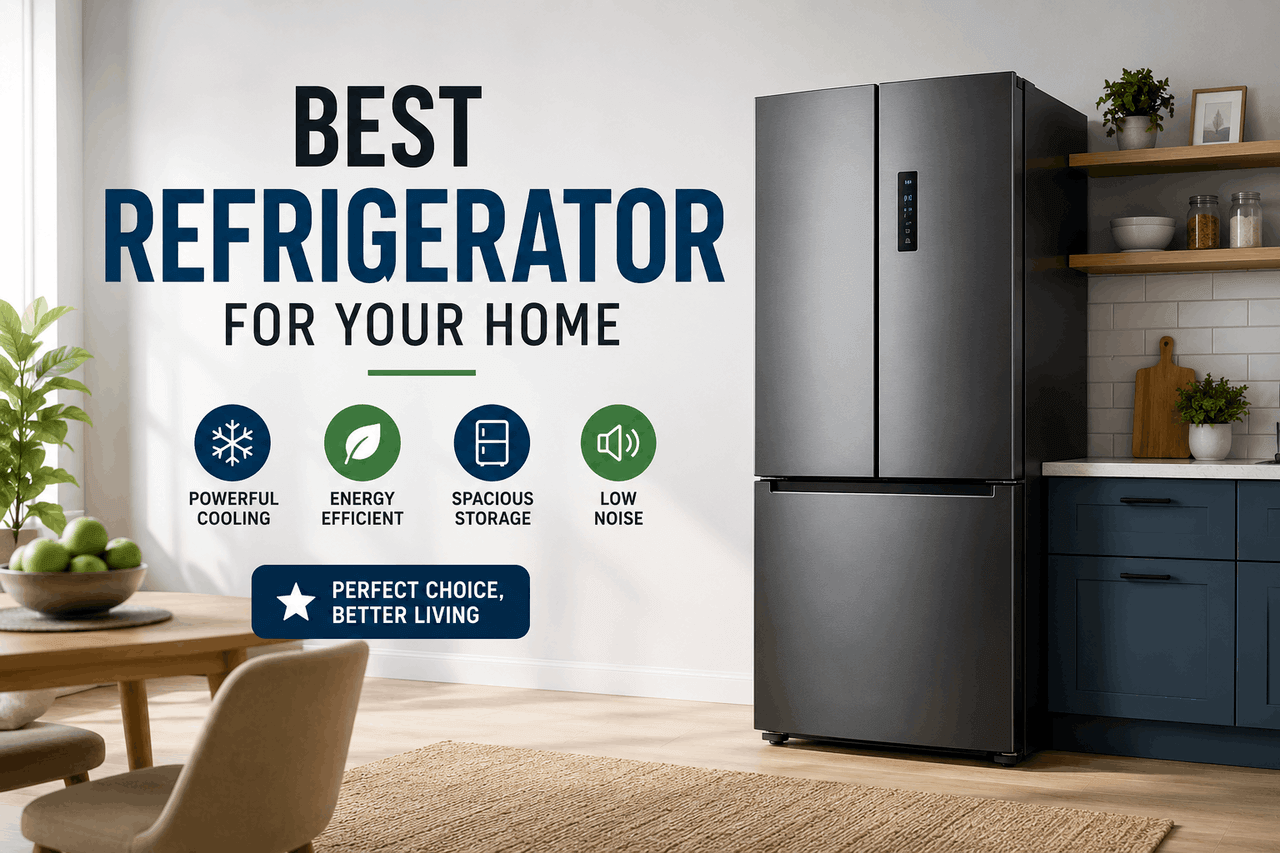
The best refrigerator brands in the USA are Samsung, LG, Whirlpool, KitchenAid, and Bosch. Samsung and LG lead on smart features and design, Whirlpool offers the best value, KitchenAid suits serious cooks, and Bosch excels at quiet, compact, counter-depth models. Your ideal pick depends on budget, kitchen size, and the features you use most.
A refrigerator is one of the few appliances in your home that runs every hour of every day. That means a good one saves you money on energy and headaches on repairs—while a poor choice can cost you both for the next decade or more.
Choosing the right brand isn’t about picking the most expensive model on the showroom floor. It’s about matching a fridge to how you actually live: how much you cook, how big your kitchen is, and how much you want to spend up front versus over time.
This guide breaks down what makes a refrigerator brand worth your money. You’ll find the criteria that matter most, in-depth looks at the top brands, a side-by-side comparison, and a few niche options for specific needs. By the end, you’ll know exactly which brand fits your kitchen and your budget.
What makes a refrigerator brand the “best”?
No single brand wins on every front. The best choice for a small apartment kitchen looks very different from the best choice for a busy family of five. So before comparing brands, it helps to know what to weigh.
Here are the criteria that matter most:
- Energy efficiency: Look for an ENERGY STAR certification. ENERGY STAR refrigerators use about 9% less energy than standard models, according to the U.S. Environmental Protection Agency. Over a fridge’s lifespan, that adds up.
- Capacity: Measured in cubic feet, capacity should match your household size. A couple may be fine with 18–22 cubic feet, while a large family often needs 25 cubic feet or more.
- Features: This ranges from the basics to the high-tech. Think water and ice dispensers, adjustable shelving, dual cooling zones, and smart connectivity that lets you check your fridge from your phone.
- Durability: A reliable fridge should last 10 to 15 years. Brands with fewer service calls save you money and stress over time.
- Design: Style matters in a kitchen. Counter-depth models, paneled finishes, and clean handle designs all affect how a fridge looks against your cabinets.
- Price: Refrigerators range from around $600 for a basic top-freezer to $3,000 and up for a smart French-door model.
- Customer reviews: Real-world feedback reveals patterns that spec sheets hide—like ice makers that fail or doors that don’t seal well.
Keep these in mind as you read on. The right brand for you is the one that scores well on the criteria you care about most.
What are the best refrigerator brands in the USA?
Five brands consistently earn strong marks for quality, features, and value. Here’s a closer look at each.
Samsung: best for smart features and design
Samsung is known for packing its refrigerators with technology and modern style. That means if you want a fridge that doubles as a kitchen showpiece—and lets you see inside without opening the door—Samsung is hard to beat.
The standout is the Family Hub line, which includes a touchscreen on the door for notes, calendars, recipes, and even streaming. Samsung’s French-door and four-door Flex models are popular for their flexible storage and sleek finishes.
The risk? Samsung’s high-tech models can be pricier to repair, and some owners report issues with ice makers over time. That said, for shoppers who want the latest features and a striking look, the trade-off often feels worth it.
Typical price range: $1,200 to $4,000+ for premium smart models.
LG: best all-around balance of features and reliability
LG sits right alongside Samsung in terms of technology, but it earns slightly stronger reliability scores in many surveys. So if you want smart features without sacrificing dependability, LG is a smart middle path.
LG’s InstaView Door-in-Door models let you knock twice to see inside a glass panel—handy for grabbing drinks without losing cold air. The brand’s French-door refrigerators are consistently among the most recommended for families.
LG fridges aren’t cheap, and like any tech-heavy appliance, repairs can add up. However, the brand’s strong reputation for cooling performance and quiet operation makes it a favorite for buyers who want it all.
Typical price range: $1,000 to $3,500 for mid-range to premium models.
Whirlpool: best for value and dependability
Whirlpool is the practical choice. That means if you want a solid, no-fuss fridge that keeps food cold for years without a premium price tag, Whirlpool delivers.
This American brand focuses on straightforward, reliable refrigerators rather than flashy tech. Its top-freezer and side-by-side models are widely available and easy to service, since parts and technicians are common across the country.
You won’t find Family Hub-style touchscreens here, and the designs lean conservative. But for shoppers who value reliability and a fair price over bells and whistles, Whirlpool is one of the safest bets you can make.
Typical price range: $600 to $2,000 for most models.
KitchenAid: best for serious home cooks
KitchenAid, a sister brand of Whirlpool, targets people who spend real time in the kitchen. So if cooking is central to your life and you want premium storage and performance, KitchenAid is built for you.
The brand’s refrigerators offer features like preserva food care systems, flexible temperature drawers, and high-end finishes that pair well with pro-style ranges. Counter-depth French-door models are a strong point.
KitchenAid sits at a higher price point, and it’s overkill for casual users. However, for avid cooks who want better food preservation and a polished look, the extra spend pays off in daily use.
Typical price range: $2,000 to $4,000 for most models.
Bosch: best for quiet, compact, and counter-depth kitchens
Bosch is the go-to for smaller kitchens and shoppers who want a clean, built-in look. That means if your space is tight or you prefer a fridge that sits flush with your cabinets, Bosch should be near the top of your list.
The German brand is famous for quiet operation and counter-depth designs that look custom without the custom price. Bosch refrigerators tend to be more compact, which suits apartments, condos, and design-focused kitchens.
The trade-off is capacity—Bosch fridges often hold less than the big French-door models from Samsung or LG. But for buyers who value a quiet, seamless fit over maximum storage, Bosch is tough to beat.
Typical price range: $1,800 to $3,500 for counter-depth models.
How do the top refrigerator brands compare?
Each brand has a clear lane. Use this comparison to spot the one that fits your priorities.
Brand | Best for | Smart features | Reliability | Price range |
|---|---|---|---|---|
Samsung | Tech and design | Excellent | Good | $1,200–$4,000+ |
LG | All-around balance | Excellent | Very good | $1,000–$3,500 |
Whirlpool | Value and dependability | Basic | Very good | $600–$2,000 |
KitchenAid | Serious cooks | Moderate | Good | $2,000–$4,000 |
Bosch | Compact, quiet kitchens | Moderate | Very good | $1,800–$3,500 |
The pattern is clear. Choose Samsung or LG if features and looks top your list. Choose Whirlpool if value and easy repairs matter most. Choose KitchenAid if you cook seriously, and Bosch if space and a built-in look come first.
Which brands make niche and specialty refrigerators?
Sometimes a mainstream brand isn’t the right fit. If you have a specific style or space need, these specialty options are worth a look.
- Built-in luxury (Sub-Zero): Sub-Zero is the benchmark for built-in refrigeration. These fridges blend into cabinetry and offer top-tier food preservation, but they command premium prices—often $8,000 and up.
- Retro style (Smeg): Smeg’s rounded, colorful refrigerators are a design statement. They’re smaller and pricier per cubic foot, but for a vintage-inspired kitchen, nothing else looks quite like them.
- Counter-depth options (Café, Frigidaire Gallery): If you want a flush, built-in look without luxury pricing, these lines offer counter-depth models with customizable hardware finishes.
These brands fill gaps the big five don’t. So if your kitchen calls for a specific look or a built-in fit, start your search here.
How do you make a refrigerator last longer?
A good fridge can last well past a decade with simple care—regardless of brand. That means a little maintenance protects the money you spent up front.
Here’s how to extend its lifespan:
- Clean the condenser coils. Dust buildup forces the fridge to work harder. Vacuum the coils (usually behind or beneath the unit) every six months.
- Check the door seals. A loose gasket lets cold air escape. Test it by closing the door on a dollar bill—if it slides out easily, the seal needs attention.
- Set the right temperature. Keep the fridge at 37°F and the freezer at 0°F for safe food storage and efficient running.
- Don’t overfill it. Air needs to circulate. An overstuffed fridge runs harder and cools unevenly.
- Replace the water filter. If your fridge has a dispenser, swap the filter every six months for clean water and a steady flow.
None of this takes much time. But these small habits keep your fridge running efficiently and put off the day you need to replace it.
Choosing the right refrigerator for your kitchen
The best refrigerator brand comes down to what you value most. There’s no universal winner—only the right match for your needs and budget.
For most shoppers, here’s where to land:
- Want smart features and a standout design? Go with Samsung or LG.
- Want reliability at a fair price? Whirlpool is the safe, proven choice.
- Serious about cooking? KitchenAid earns its premium.
- Short on space or want a built-in look? Bosch fits the bill.
- Chasing luxury or a retro vibe? Look to Sub-Zero or Smeg.
Start by listing your top three priorities—say, capacity, energy efficiency, and price. Then measure your space, set a budget, and compare models within your chosen brand. A little homework now pays off every single day for the next 10 to 15 years.
What are the different types of refrigerators?
Refrigerators come in several primary configurations. Each style changes how you interact with your food and how the appliance fits into your kitchen.
What are top-freezer refrigerators?
Overview: Top-freezer refrigerators are the traditional workhorses of the kitchen. They feature a smaller freezer compartment sitting above a larger fresh food section.
Who is this for: These are ideal for budget-conscious shoppers, rental properties, and small kitchens. They are good for people who do not mind bending down to reach lower shelves.
Risks: You have to bend over frequently to access the crisper drawers and lower shelves. They also lack the modern aesthetic many homeowners want.
Rewards: They are highly affordable, usually costing between $600 and $1,000. They are also incredibly space-efficient, offering maximum storage for their footprint.
What are bottom-freezer refrigerators?
Overview: Bottom-freezer refrigerators flip the traditional layout. The fresh food compartment is at eye level, and the freezer sits underneath as a pull-out drawer or swinging door.
Who is this for: This layout is right for you if you access fresh foods far more often than frozen foods.
Risks: Finding items in a bottom pull-out freezer can be frustrating. Foods tend to pile up, requiring you to dig to find what you need.
Rewards: Your most-used items are right at eye level. You will not have to bend down to grab a heavy gallon of milk or fresh produce.
What are side-by-side refrigerators?
Overview: Side-by-side refrigerators split the appliance down the middle. The freezer is on the left, and the fresh food section is on the right.
Who is this for: These models are excellent for kitchens with narrow walkways. They are also great for people who freeze a lot of bulk items and want organized freezer shelves.
Risks: The narrow compartments make it nearly impossible to store wide items. A large pizza box or a wide party platter will not fit on these shelves.
Rewards: The doors require very little swing space to open. You also get easy, eye-level access to both fresh and frozen foods.
What are French door refrigerators?
Overview: French door refrigerators combine a side-by-side top with a bottom freezer. The fresh food compartment is accessed via two half-width doors, while the freezer sits below as a pull-out drawer.
Who is this for: Families who want maximum capacity, modern styling, and the ability to store wide items.
Risks: French door models are the most expensive option on the market, usually costing $1,500 to $3,500. They also have more moving parts, which can lead to higher repair costs over time.
Rewards: You get an expansive, wide-open, fresh food section at eye level. The narrow doors also save space when opened in tight kitchens.
What are compact or mini refrigerators?
Overview: Compact refrigerators are scaled-down units designed to fit under counters or in small corners.
Who is this for: College students in dorms, professionals outfitting an office, or homeowners building a home bar.
Risks: They offer very little space and often struggle to maintain consistent freezing temperatures in their tiny freezer compartments.
Rewards: They fit anywhere and cost a fraction of a full-sized unit, usually coming in under $300.
What are counter-depth refrigerators?
Overview: Counter-depth refrigerators are shallower than standard models. They are designed to sit flush with your kitchen cabinets, which are typically 24 to 25 inches deep.
Who is this for: Homeowners who want a built-in, premium look without the massive expense of true custom appliances.
Risks: You lose significant storage capacity. A counter-depth model usually sacrifices 4 to 6 cubic feet of space compared to a standard-depth model of the same width.
Rewards: Your kitchen feels larger and more open. The appliance does not protrude into your walkways, creating a seamless aesthetic.
What key features should you look for in a refrigerator?
Once you choose a style, you have to look at the features inside the box. Not all features are necessary, but certain additions will make your daily routine much easier.
How much capacity and size do you need?
Size is the most rigid constraint in your buying journey. You have to measure the width, depth, and height of your cutout. Most standard refrigerators are 30 to 36 inches wide. Regarding capacity, aim for 4 to 5 cubic feet of space per adult in your household. A family of four usually needs a 20-cubic-foot refrigerator to comfortably store a week’s worth of groceries.
Does the Energy Star rating matter?
Energy efficiency directly impacts your utility bills. Look for the Energy Star label, which indicates the appliance operates 9 to 10 percent more efficiently than the federal minimum standard. An Energy Star refrigerator will save you money over its 15-year lifespan and reduce your household’s carbon footprint.
Are smart features worth the money?
Smart refrigerators connect to your home Wi-Fi. They offer touchscreens, inventory tracking, and app control. Choose a smart refrigerator if you want alerts when the door is left open or if you prefer managing family calendars from the kitchen. Be aware that smart technology tends to outpace the appliance’s lifespan. A touchscreen might feel outdated five years before the compressor actually fails.
Should you get water and ice dispensers?
Indoor dispensers are incredibly convenient. They provide chilled water and crushed ice on demand. However, they take up valuable storage space inside the door. According to industry repair data, the ice maker is also the most common component to break on modern refrigerators. You trade long-term reliability for daily convenience.
What storage options are most useful?
Look for flexibility. Adjustable shelves allow you to reconfigure the interior for tall bottles or large pots. Deli drawers and gallon-sized door bins keep small items organized and free up the main shelves. If you cannot adjust the shelves easily in the store, you will be frustrated when you try to do it at home.
How do temperature controls and zones work?
Dual evaporators separate the airflow between the fridge and the freezer. This prevents the dry, cold air of the freezer from wilting your fresh produce. It also stops strong food odors from transferring to your ice cubes. Look for models with digital temperature controls rather than ambiguous dials numbered 1 through 5.
What is a normal noise level?
Refrigerators generate noise when the compressor runs and when ice drops into the bin. If you have an open-concept floor plan where the kitchen bleeds into the living room, a loud refrigerator will disrupt your quiet evenings. Read customer reviews specifically looking for complaints about buzzing or whining compressors.
How should you choose a finish and style?
Stainless steel remains the industry standard because it fits almost any design scheme. Smudge-proof or fingerprint-resistant stainless steel is a must if you have young children. Black stainless steel offers a modern, darker look, but be aware that it can scratch easily, revealing silver metal underneath.
Who are the top refrigerator brands?
The brand name on the door often dictates the reliability, customer service, and replacement part availability you can expect.
What makes Samsung refrigerators stand out?
Samsung is a technology company, and its refrigerators reflect that. They dominate the market for smart features, offering massive touchscreens and advanced app integration. They are good for tech-forward buyers. Be aware that they have faced historical issues with their ice makers, though recent models show signs of improvement.
Why do people choose LG refrigerators?
LG offers excellent performance and sleek, modern styling. Their linear compressors are highly efficient and quiet. They are a great choice for homeowners wanting high-end features like craft ice makers and glass “InstaView” doors. Like Samsung, getting timely repairs in rural areas can sometimes be challenging due to a smaller service network.
What is the reputation of Whirlpool?
Whirlpool is the definition of reliability. They do not often chase flashy trends, focusing instead on solid, dependable cooling. A Whirlpool refrigerator is for the buyer who wants an appliance to last over a decade with minimal fuss. Replacement parts are incredibly cheap and easy to find anywhere in the country.
Are GE Appliances a good choice?
GE Appliances builds tough, heavily featured refrigerators. Their Profile and Cafe lines offer premium finishes and excellent interior layouts. They are a strong option for buyers who want American-style appliances with robust water dispensers and bright LED lighting.
Why buy a Bosch refrigerator?
Bosch builds premium, engineered appliances. Their refrigerators are famous for having dual compressors and evaporators, which keep food fresh for remarkably long periods. Bosch is ideal for buyers looking to build a high-end kitchen. You will pay a premium, often starting above $2,500, but you get exceptional build quality.
What does KitchenAid offer?
KitchenAid, owned by the same parent company as Whirlpool, sits as a premium brand. Their refrigerators feature distinctive industrial styling, thick handles, and wood-finish interiors on select models. They are for the design-conscious consumer who wants a professional-looking kitchen without paying custom-built-in prices.
What are the best refrigerators?
Based on current testing data and consumer feedback, certain models stand out in their respective categories.
What is the best overall refrigerator?
The Bosch 800 Series French Door refrigerator takes the top spot. It features dual compressors, a sleek counter-depth design, and an internal water dispenser that preserves the clean look of the exterior. It is expensive, but it offers the best combination of food preservation and reliability.
What refrigerator offers the best value?
The Whirlpool 25 cu. ft. A French Door refrigerator provides massive space at a reasonable price. It lacks smart screens and craft ice, but it cools evenly and runs quietly. Choose this if you want maximum capacity without spending over $2,000.
What is the best smart refrigerator?
The Samsung Family Hub French Door refrigerator remains the leader in smart technology. The built-in screen acts as a family whiteboard, a music player, and a window into the fridge via internal cameras.
What is the best French door refrigerator?
The LG Studio Counter-Depth French Door model offers a massive capacity for a counter-depth unit. It includes LG’s craft ice maker, which produces slow-melting spherical ice perfect for cocktails.
What is the best refrigerator for small spaces?
The GE 24-inch Bottom-Freezer refrigerator is perfect for apartments and condos. It measures just 24 inches wide but uses its vertical space efficiently to offer plenty of storage for one or two people.
What is the best refrigerator for large families?
The LG 30 cu. ft. The standard-depth French Door refrigerator is a cavernous appliance. It can hold enough food for a family of six with ease. If you have the floor space to accommodate its massive depth, it will solve all your grocery storage problems.
How should you maintain your refrigerator?
Buying a good refrigerator is only the first step. You have to maintain it to ensure it reaches its 15-year life expectancy.
What are the best cleaning tips?
Clean your condenser coils every six months. The coils are usually located behind a kick plate at the bottom or on the back of the unit. When dust builds up on the coils, the compressor has to work twice as hard to cool the interior. Use a vacuum with a brush attachment to gently remove the dust. Wipe down the door gaskets with warm, soapy water monthly to ensure the doors seal tightly.
How do you troubleshoot common issues?
If your refrigerator stops cooling, check the obvious first. Ensure it is plugged in and the circuit breaker has not tripped. Make sure nothing is blocking the air vents inside the freezer, which stops cold air from circulating. If the ice maker stops working, check if the water filter needs replacing. A clogged filter will restrict water pressure to the ice maker.
When is it time to replace your refrigerator?
You should replace your refrigerator if it is over 10 years old and requires a repair that costs more than half the price of a new unit. A failing compressor is the most expensive repair, usually costing upwards of $800. If your compressor dies on an older unit, put that money toward a new, more efficient model instead.
Making your final refrigerator choice
Choosing a refrigerator requires you to weigh your physical space against your daily habits. Start by measuring your cutout multiple times. Narrow down your choices by the style that fits your cooking style, whether that means a spacious French door model or a space-saving top-freezer unit.
Once you know the size and style, focus on the features that actually improve your life. Skip the indoor ice maker if you want maximum reliability, or embrace smart technology if it helps manage your busy household. Stick to reputable brands with solid service networks, and you will secure an appliance that keeps your food fresh and your kitchen running smoothly for years to come.
Frequently asked questions
What is the most reliable refrigerator brand?
Whirlpool, LG, and Bosch consistently earn strong reliability scores in consumer surveys. Whirlpool stands out for easy repairs and widely available parts, while LG and Bosch are praised for cooling performance and quiet operation. Reliability also depends on the specific model, so check reviews before you buy.
How much should I expect to spend on a good refrigerator?
A dependable refrigerator typically costs between $1,000 and $2,500. Basic top-freezer models start around $600, while premium French-door and smart models run $3,000 or more. Set your budget based on the capacity and features you’ll actually use, not the most expensive option available.
How long does a refrigerator usually last?
Most refrigerators last 10 to 15 years with proper care. Cleaning the condenser coils, checking the door seals, and replacing the water filter regularly can help you reach the upper end of that range. Heavy use and skipped maintenance tend to shorten a fridge’s life.
Are smart refrigerators worth the extra cost?
Smart refrigerators are worth it if you’ll use the features—like seeing inside from your phone, managing grocery lists, or controlling temperature remotely. If you mostly want reliable cooling, a standard model offers better value. Keep in mind that tech-heavy fridges can cost more to repair.
What size refrigerator do I need?
A general rule is 4 to 6 cubic feet of capacity per adult. A couple often does well with 18–22 cubic feet, while a family of four or more usually needs 25 cubic feet or more. Always measure your kitchen space before buying to make sure the fridge fits.
How much does a good refrigerator cost?
A reliable refrigerator typically costs between $1,000 and $3,000. Basic top-freezer models sit at the lower end of this range, while large French door models and smart refrigerators occupy the higher end.
How long does a new refrigerator last?
Most modern refrigerators last between 10 and 15 years. You can extend this lifespan by performing regular maintenance, such as vacuuming the condenser coils and replacing water filters on time.
Are extended warranties worth buying for a refrigerator?
Choose an extended warranty only if you are purchasing a complex model with smart screens and indoor ice makers. These components fail frequently and are expensive to fix. For basic top- or bottom-freezer models, the warranty cost rarely justifies the risk.
What is the most reliable refrigerator style?
Top-freezer refrigerators are generally the most reliable. They have very few moving parts, simple cooling mechanisms, and usually lack problematic ice and water dispensers in the door.