Our Top Picks
Ninja Coffee Maker
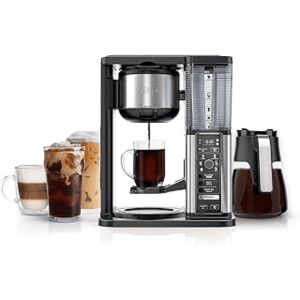
Want café-style drinks at home without buying a pile of gadgets? This coffee maker might be what you’re after. It brews coffee in several styles, makes different sizes, and even froths your milk. Here’s a closer look at what it offers.
4 Brew Styles
You get four brew styles, so you can match your coffee to your mood.
- Classic: Your everyday cup. Smooth, balanced, and easy to drink.
- Rich: A bolder brew with more punch. It’s great for mornings when you need a stronger kick.
- Over Ice: Made to be poured straight over ice (more on this below).
- Specialty Brew: A thick, strong coffee concentrate for milk-based drinks.
This variety means one machine can cover most of your coffee habits. Some days you want a plain mug. Other days you want something fancier. Either way, you only need one button.
Specialty Brews
This is where the machine gets fun. Specialty Brew makes a super-rich coffee concentrate. You can use it as the base for lattes, macchiatos, cappuccinos, and other coffeehouse-style drinks.
Here’s a simple way to think about it. The concentrate is strong enough that it won’t taste weak once you add milk. That’s the problem with regular coffee in a latte. The milk takes over, and you barely taste the coffee.
One small note: this concentrate is not true espresso. Real espresso is made with high pressure. Still, it’s strong and bold enough to give you a very good home version of those drinks.
Make Iced Coffee
Anyone who’s made iced coffee at home knows the problem. You pour hot coffee over ice, and the ice melts fast. The result? A watery, sad drink.
The Over Ice setting fixes this. It brews a stronger coffee right over the ice, so the melting ice doesn’t water it down. You get a fresh, flavorful glass every time.
It also saves time. There’s no need to brew a pot the night before and wait for it to chill.
6 Brew Sizes
Sometimes you need one cup. Sometimes you need enough for the whole family. This machine has six sizes to cover both:
- Cup
- XL Cup
- Travel Mug
- Multi-Serve Travel Mug
- Half Carafe
- Full Carafe
So if you’re rushing out the door, brew straight into your travel mug. If friends are coming over, go for the full carafe. It’s easy to pick the right amount, and you waste less coffee.
No Pods Required
Many single-serve machines lock you into pods. Those can get pricey, and your choices are limited.
Not this one. You can use your favorite ground coffee to make a single cup. You don’t even need a reusable pod. That means more freedom to try different roasts, local brands, or that bag of beans you’ve been saving.
It’s also kinder to your wallet and to the planet, since you skip the single-use plastic.
Built-In, Fold-Away Frother
The frother is built right in. It turns hot or cold milk (or a milk alternative) into silky, smooth froth. That means you can make a warm cappuccino or a cold foam topping.
When you’re done, fold it away to save counter space. It’s also removable, which makes cleaning much easier. Milk residue can get sticky fast, so a frother you can pop off and rinse is a real plus.
Removable Water Reservoir
The water tank holds 40 ounces and lifts right off the machine. You can carry it to the sink, fill it up, and put it back. There’s no need to pour water from a jug and spill it everywhere.
A big tank also means fewer refills. You can brew several cups before you need to top it up.
Pros and Cons
Pros
- Four brew styles give you plenty of choice.
- The concentrate works well for lattes, macchiatos, and cappuccinos.
- Iced coffee stays strong and doesn’t get watery.
- Six sizes suit solo drinkers and big groups.
- You can use your own ground coffee, so no pods to buy.
- The built-in frother saves you from buying a separate one.
- The frother folds away and comes off for cleaning.
- The 40-oz. tank is easy to fill and refill.
Cons
- The concentrate is strong, but it’s not real espresso.
- It may take up more counter space than a basic coffee maker.
- It costs more than a simple drip machine.
- With so many options, there’s a short learning curve.
- The frother and tank need regular cleaning to stay fresh.
Quick Tips for Better Coffee
- Use fresh grounds. Fresher coffee tastes better, no matter the machine.
- Try a medium to dark roast for Specialty Brew. It holds up well in milky drinks.
- Use cold, filtered water. It can improve the taste.
- Clean the frother right after use. Dried milk is much harder to remove.
- Descale the machine now and then. This keeps it running well for years.
This coffee maker is a solid pick if you like variety. It makes everything from a simple cup to a frothy latte, and you aren’t stuck buying pods. The pros clearly outweigh the cons for most home coffee fans. If you want café-style drinks without the café prices, it’s worth a look.
If you’d like this as a file, I can put it in a Word doc or Markdown for you.
BLACK+DECKER 12-Cup Drip Coffee Maker
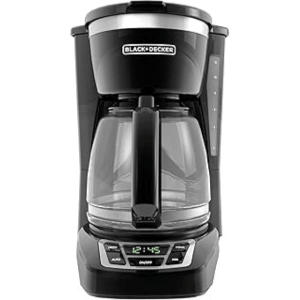
If you want a coffee maker that does its job without fuss, this one is worth a look. It makes a full pot, it’s easy to use, and it has a few smart touches that make mornings smoother. Let’s go through what it offers.
Sturdy 12-Cup Glass Carafe
The carafe holds up to 12 cups. That’s enough for a family breakfast, a small office, or a few refills for yourself. Just keep in mind that one “cup” here means about 5 ounces. That’s smaller than a regular mug. The real amount can also shift a little depending on how you brew.
Filling it is simple because the carafe has clear measurement marks on the side. You won’t have to guess how much water to add. The handle is easy to grip, so pouring feels comfortable and steady, even when the pot is full.
Glass has some nice perks too. You can see how much coffee is left at a glance. It also doesn’t hold onto old flavors the way some plastic can.
Sneak-A-Cup Feature to Stop Drips
We’ve all been there. You’re half asleep, the coffee is still brewing, and you just can’t wait. Pulling the pot out mid-brew usually means hot drips all over the burner.
This feature fixes that. When you slide the pot out, the flow of coffee pauses for a short time. That gives you a moment to pour your first cup without making a mess. Put the pot back, and the brewing carries on as normal.
Easy-View Water Window
On the front of the machine, there’s a window that shows how much water is inside. It tells you exactly how much coffee you’ll end up with. No more filling the pot, pouring it in, and hoping you got it right.
One quick note: the brew basket needs a standard paper filter to work properly. Don’t skip it. Without one, you’ll get grounds in your cup and a clogged basket.
Digital Controls With a Rubberized Feel
The buttons are big and have a soft, rubbery finish. They’re easy to find and press, even when you’re still groggy. The screen is easy to read, too. It shows the clock, the brew time, and your programming choices, so you always know what’s going on.
QuickTouch Programming and Auto Shutoff
This is where the machine really helps you out. You can set it up to brew up to 24 hours ahead. Load it at night, set the time, and wake up to the smell of fresh coffee. Or set it for any other time you like.
There’s also a 2-hour auto shutoff. If you walk out the door and forget to turn it off, the machine does it for you. That’s a nice bit of comfort for anyone who has ever wondered, “Did I leave the coffee maker on?”
Pros and Cons
Pros
- Large 12-cup capacity works well for families and groups
- Measurement marks on the carafe make filling easy
- Sneak-A-Cup stops messy drips when you pour early
- Water window shows the exact amount of water inside
- Big, soft buttons and a clear screen are simple to use
- 24-hour programming lets you wake up to fresh coffee
- 2-hour auto shutoff adds safety and peace of mind
- Uses standard paper filters, which are cheap and easy to find
Cons
- A “cup” is only about 5 ounces, so 12 cups is fewer big mugs than it sounds
- Glass carafes can break if dropped or knocked
- Needs paper filters, which means a small ongoing cost
- Makes only a full-size pot, so it may be too much if you drink one cup a day
- Coffee may cool down over time, since the auto shutoff turns the heat off after 2 hours
Tips to Get the Best Coffee
A few small habits can make a big difference:
- Use fresh, cold water. It really does change the taste.
- Measure your coffee. A good starting point is about one to two tablespoons of grounds per cup, then adjust to your taste.
- Grind fresh if you can. Whole beans ground just before brewing taste much better.
- Clean it regularly. Run a mix of water and white vinegar through the machine every month or so to clear out buildup. Then run plain water through it a couple of times.
- Wash the carafe and basket after each use. Old coffee oils can leave a bitter taste.
Who Is This Coffee Maker Best For?
This model suits people who want simple, reliable coffee without extra buttons and gadgets. It’s a good pick for busy households, shared offices, and anyone who likes to set the timer and sleep in a little longer.
If you only brew a single cup now and then, a smaller machine might fit better. But if you like a full pot and an easy routine, this one covers the basics very well.
This 12-cup coffee maker keeps things practical. The sturdy carafe, the drip-stopping Sneak-A-Cup feature, the water window, and the easy controls all make daily brewing smoother. Add programmable timing and an auto shutoff, and you get a machine that’s both handy and safe. It’s not flashy, but it gets the job done, and that’s what most of us want first thing in the morning.
Cuisinart Coffee Maker with Blade Grinder
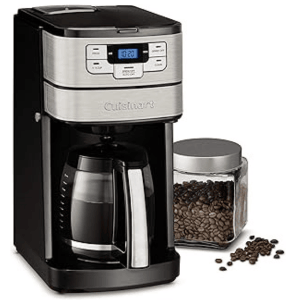
Before you brew your first pot, take a few minutes to look through the user manual. It’s short, and it walks you through setup, cleaning, and the settings you’ll use most. A quick read now can save you from a messy counter or a weird-tasting first cup later.
Brew Pause: Grab a Cup Early
We’ve all been there. The coffee is dripping, the smell is amazing, and you just can’t wait. Cuisinart’s trademarked Brew Pause feature fixes that.
Lift the carafe mid-brew and pour yourself a cup. The machine stops the flow so nothing spills on the burner. Put the carafe back and brewing picks up where it left off.
Keep in mind that the first cup out of a half-finished pot can taste a little stronger than the rest. The full pot evens out once it’s done. Still, on a rushed morning, that early cup is a real lifesaver.
Automatic Grinder: Fresh Beans, Every Time
This machine has a built-in blade grinder. It grinds whole beans right before brewing, so you get fresh, flavorful coffee without a separate grinder to wash and store.
Fresh grinding matters more than most people think. Once beans are ground, they start losing their aroma fast. Grinding just before brewing keeps more of that rich flavor in your cup.
Don’t want to grind? No problem. There’s a grind-off option for pre-ground coffee. That’s handy if you’ve got a favorite blend from the store, or if someone in the house prefers decaf. Just add your grounds and brew.
A quick tip: blade grinders chop beans into slightly uneven pieces. If your coffee tastes a bit bitter or weak, try adjusting how much coffee you use rather than blaming the beans.
Durable Filters: Less Waste, Better Taste
The machine comes with a permanent gold-tone coffee filter. You rinse it and reuse it, so there’s no need to keep buying paper filters. That saves money and cuts down on trash. Gold-tone filters also let a bit more of the coffee’s natural oils through, which many people say gives a fuller taste.
There’s also a built-in charcoal water filter. It helps remove odors and tastes from your tap water, so what you drink tastes like coffee and not like your plumbing. Charcoal filters wear out over time, so plan to swap yours out on the schedule in the manual.
Pros and Cons
Pros
- Brew Pause lets you pour a cup before the pot is done
- Built-in grinder means fresher coffee with one machine
- Grind-off option works with pre-ground coffee
- Permanent filter saves money on paper filters
- Charcoal water filter improves taste
- Less counter clutter than a separate grinder and brewer
Cons
- Blade grinders make uneven grounds, which can affect flavor
- The grinder adds noise first thing in the morning
- The permanent filter needs regular rinsing and cleaning
- The charcoal filter has to be replaced now and then
- A combo machine takes more cleaning than a basic coffee maker
Is It Worth It?
If you love fresh coffee but hate extra gadgets, this is a solid pick. You get grinding, brewing, and filtering in one machine, plus the handy Brew Pause. Coffee snobs might want a burr grinder for more control. For everyday drinkers, though, it’s an easy way to get a better cup at home.
BUNN GRB Velocity Brew
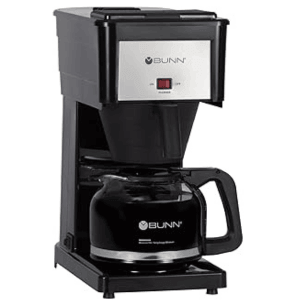
If you love good coffee but hate waiting for it, the BUNN Speed Brew is worth a close look. It’s built to make a full pot in about four minutes, and it does it with a design that’s a bit different from most home coffee makers. Let’s break down what makes it stand out.
BUNN Brews Differently
Most home coffee makers heat water only when you start a brew. The BUNN Speed Brew works another way. Inside, it has a commercial-grade stainless steel tank that holds 70 ounces of water and keeps it hot all the time. So when you’re ready for coffee, you just flip the lid, add water and grounds, and brew. No long warm-up.
A quick note if you’re also thinking about espresso-style brewing: the pressure you get depends on your setup. If the grind is too coarse, you use too little coffee, or you don’t tamp the grounds firmly enough, the pressure may be too low for a good brew. Also, the amount of espresso you get changes with the grind size and the amount of coffee. If you change either one, you may need to reprogram the machine.
Classic Speed Brew Look
The design is simple and clean. You get a black finish with a stainless-steel faceplate. It looks sharp without being flashy, so it fits into most kitchens, whether your style is modern or traditional.
Designed and Assembled in the USA
BUNN designs and assembles this coffee maker in the United States. For many buyers, that’s a nice bonus. It often signals pride in craftsmanship and a focus on quality control.
Exclusive Drip-Free Carafe
Anyone who has dealt with a dripping coffee pot knows how annoying it is. BUNN tackled that with a special carafe. The lid and spout are designed to arc the coffee smoothly into your cup. Whatever is left on the spout gets pulled back into the carafe. The result is a clean pour, with fewer drips on your counter and table.
Switch-Activated Warmer Plate
The warmer plate keeps your coffee at a good serving temperature. You control it with a switch, so you decide when it’s on. That’s handy if you want a hot cup an hour later, or if you’d rather turn it off and save a little energy.
Fastest 10-Cup Home Coffee Maker
Speed is the big selling point here. The Speed Brew can brew a full 10-cup carafe in just 4 minutes. That’s about half the time of a typical coffee maker. (This is based on BUNN’s own testing against similar machines.) On busy mornings, those saved minutes matter.
Café Taste at Home
Good coffee isn’t only about hot water. It’s also about how the water meets the grounds. This machine uses a commercial-style sprayhead with multiple streams. It spreads hot water evenly over all the grounds, so they extract well. That helps bring out richer flavor, much like what you’d get at your favorite café.
Pros and Cons
Pros
- Brews a full pot in about 4 minutes
- Hot water is always ready, so there’s no waiting for it to heat up
- Drip-free carafe keeps your counter clean
- Even water spray helps pull out more flavor
- Warmer plate has an on/off switch
- Sturdy build, designed and assembled in the USA
- Classic black and stainless look
Cons
- The always-hot tank uses some power to stay heated
- It’s a bit bigger than basic coffee makers, so it needs more counter space
- It usually costs more than budget models
- Speed claims come from the maker’s own testing
- Espresso-style results need the right grind, dose, and tamping, and may need reprogramming
The BUNN Speed Brew is a smart pick if you want fast, tasty coffee without a fuss. The hot water tank, the even spray, and the no-drip carafe all work together to make mornings easier. It does cost more and takes up some space, but for coffee lovers who value speed and quality, it’s a solid choice.
Ninja Luxe Café Premier
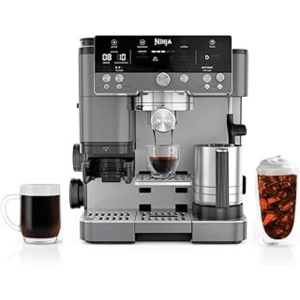
Great espresso at home doesn’t have to be hard. You don’t need training, and you don’t need to watch hours of tutorials.
The Ninja Luxe Cafe Premier is a 3-in-1 machine that handles the tricky parts for you. It makes lattes, cappuccinos, cold brew, and plain old cups of coffee. If you’re new to espresso, it’s a friendly place to start. If you just want a good cup with very little effort, it fits that too.
Hands-Free Frothing
Frothing milk is where many home baristas struggle. This machine takes the stress out of it with its Dual Froth system. A magnetic spinning whisk works together with an automatic steamer. The result is smooth, silky microfoam, and you get it every time.
Here’s how easy it is:
- Pick your drink.
- Add your milk.
- Walk away.
Want to do it yourself? You can. Switch to the “Steam” function and hold START FROTH for 3 seconds. That gives you manual control, which is nice once you get more confident.
Coffee Maker with Grinder
Fresh grounds make a big difference in taste, and this machine has a grinder built right in. It’s a conical burr grinder with 25 settings. That means you can fine-tune the grind for whatever you’re making.
Fancy espresso in the morning? Easy. A classic cup of coffee? Done. A cold brew on a hot afternoon? No problem. You get the right grind and the right amount of coffee for each one.
Smart Technology
The machine uses what Ninja calls Barista Assist Technology. Think of it as a helper that guides you through each step. Here’s what it does:
- Grinds the beans with precision
- Doses by weight, so you don’t have to guess
- Helps you tamp, so the coffee puck is pressed just right
- Adjusts temperature and pressure in real time, based on the drink you pick
In short, it handles the details that usually trip beginners up.
Flavorful Cold-Pressed Drinks
This is one of the more fun features. The cold-pressed espresso function brews at a lower temperature, lower pressure, and a slower pace. The goal is a smoother, more flavorful shot.
It works great for espresso martinis and iced lattes. And if you prefer drip coffee, there’s a rapid cold brew option. You get cold brew without the long wait.
Conveniently Designed
Counter space is precious, and this machine respects that. It has onboard storage for your accessories, so nothing ends up scattered around your kitchen.
Here’s what comes in the box:
- Portafilter
- Milk jug
- Double basket
- Luxe basket
- Assisted tamper
- Cleaning brush
- Cleaning disc
- Funnel
- Descaling powder
- Cleaning tablets
- Hard water testing kit
- Instructions and Inspiration Guide
The cleaning and descaling supplies are a thoughtful touch. Many machines make you buy these later.
Pros and Cons
Pros
- Very beginner-friendly, with guidance at each step
- Built-in grinder, so you don’t need to buy one separately
- 25 grind settings give you plenty of control
- Automatic frothing makes silky milk with almost no effort
- Manual steam mode is there when you want to practice
- Cold-pressed espresso and cold brew add variety
- Cleaning and descaling supplies are included
- Onboard storage keeps the counter tidy
Cons
- It’s a bigger machine than a basic drip maker, so check your counter space first
- Automatic features may feel limiting to seasoned espresso fans who like full control
- Like any espresso machine, it needs regular cleaning and descaling
- All-in-one machines usually cost more than simple coffee makers
- There may be a short learning curve with all the menu options
Who Is It For?
This machine suits people who love café drinks but don’t want a complicated setup. It’s great for beginners, busy households, and anyone who wants hot and cold coffee from one machine.
A quick tip: if you live in an area with hard water, use the testing kit early on. Hard water can build up scale inside any coffee machine, and descaling on schedule helps it last longer and taste better.
About Ninja
Ninja’s motto is “You Can Make It.” The brand designs kitchen tools for home cooks, food lovers, and everyone in between. The goal is simple: help you make what you want, the way you want it.
The Luxe Cafe Premier fits that idea well. It takes the hard parts out of coffee so you can enjoy the fun parts.
Why an Integrated Grinder Makes a Difference
Freshness is the foundation of flavour.
Coffee beans contain hundreds of volatile compounds that create aroma and taste. Once ground, those compounds begin to oxidise rapidly. Pre-ground coffee, even when sealed, has already lost a significant portion of its flavour potential by the time it reaches your cup.
Grinding directly before brewing preserves those compounds. So the flavour difference between a machine that grinds fresh and one that uses pre-ground coffee is not subtle — it’s the difference between flat and bright, stale and aromatic.
Convenience that doesn’t cut corners
Owning a standalone grinder and a separate brewer works well. But it adds steps, counter space, and one more thing to clean. An integrated machine handles the grind-to-brew process in a single workflow. You load beans, set your preferences, and the machine takes care of the rest. That convenience matters more on busy mornings than it does in a product listing.
Consistency, cup after cup
Manual grinding introduces variation. The grind size, the dose, the timing — each variable shifts from one session to the next. An integrated machine locks in your settings and reliably replicates them. That consistency is especially valuable when dialling in espresso, where even small grind changes can noticeably affect extraction.
Burr vs Blade Grinders: Which Type Produces Better Coffee?
Burr grinders: precision over speed
A burr grinder crushes beans between two abrasive surfaces — either conical or flat — to produce a uniform particle size. That uniformity matters because evenly sized grounds extract at the same rate. The result is a balanced cup with predictable flavour.
Conical burr grinders use a cone-shaped burr inside a ring. They run at lower speeds, generate less heat, and tend to be quieter. Most mid-range and premium integrated machines use conical burrs.
Flat burr grinders use two parallel rings facing each other. They produce an extremely consistent grind and are common in commercial espresso machines. They’re less common in home integrated machines but do appear in higher-end models.
Blade grinders: fast but imprecise
A blade grinder chops beans with a spinning blade, similar to a blender. The result is uneven — a mix of fine powder and coarse chunks. Fine particles over-extract and turn bitter; coarse chunks under-extract and taste sour. That combination in the same cup is difficult to balance.
Why burr grinders are the better choice for integrated machines
Burr grinders cost more to manufacture, which is why blade-based machines tend to be cheaper. But the flavour trade-off is significant enough that, if you’re investing in an integrated machine, a burr grinder is worth the price difference. Most reputable integrated machines at mid-range prices and above use burr grinders.
Key Features to Look for in a Coffee Machine with Grinder
Grind settings — Look for a machine with at least 5 grind settings, from coarse to fine. More settings give you more control over extraction, which matters if you brew both espresso and drip coffee.
Brew strength control — Separate from grind size, brew strength typically adjusts the coffee-to-water ratio. A machine with both controls gives you more precise tuning.
Water reservoir capacity — A larger reservoir (1.5 litres or more) means fewer refills. If you brew multiple cups daily or for a household, this matters more than it might seem.
Bean hopper capacity — Most integrated machines hold between 200g and 500g of beans. A larger hopper is convenient but can work against freshness if beans sit unused for days. Match hopper size to how quickly you go through beans.
Ease of cleaning — Integrated grinders have more components to clean than standard machines. Look for removable brew groups, dishwasher-safe parts, and clear cleaning indicators. Machines that are difficult to clean get cleaned less often, which affects both flavour and longevity.
Durability and build quality — Stainless steel and metal components outlast plastic, particularly for parts under regular mechanical stress like the grinder burrs and portafilter.
User interface and programmability — Some machines offer touchscreens, app connectivity, and saved profiles. Others have simple dials. More features add value if you’ll use them; they add complexity if you won’t.
How to Choose the Right Machine for Your Needs
Start with your budget. Under $200 gets you functional drip brewing with basic grinding. Between $300 and $700, you access mid-range fully automatic machines with genuine grind control. Above $700, semi-automatic and premium automatic machines offer professional-grade output. The price difference is usually justified — but only if you’ll use the features you’re paying for.
Match the machine to how you actually drink coffee. An espresso drinker who buys a drip machine with a grinder will be frustrated, and vice versa. Be honest about whether you want espresso, filter coffee, or both — and choose accordingly.
Measure your counter space before you buy. Integrated machines are larger than standalone brewers. The Breville Barista Express, for example, is approximately 13 inches wide and 15 inches tall. Check dimensions against your available space, including clearance above the machine for bean loading.
Read recent owner reviews, not just expert reviews. Long-term reliability, ease of cleaning, and quality of customer support are evident in owner reviews after 6 to 12 months of use. Expert reviews rarely capture these factors.
How to Maintain Your Coffee Machine and Grinder
Regular cleaning
Rinse removable brewing components daily with warm water. Run a cleaning cycle (most machines prompt you to do so automatically) weekly. Coffee oils build up quickly and turn rancid — that residue affects flavour more than most users realise.
Descaling
Hard water deposits, or limescale, build up inside your machine’s heating elements and pipes over time, reducing efficiency and eventually causing damage. Descale every two to three months, or sooner if your water is particularly hard. Use the descaling solution recommended by your machine’s manufacturer.
Grinder care
Burrs accumulate coffee oils and fine particles. Use a grinder brush to clear the burr chamber weekly. Every few months, use grinder cleaning tablets (such as Urnex Grindz) to break down oil buildup that a brush can’t reach. Avoid washing burrs with water unless your manual specifically approves it.
Bean and water quality
Your machine can only work with what you put into it. Use freshly roasted beans within four weeks of their roast date, stored in an airtight container away from light and heat. Use filtered water if your tap water is heavily chlorinated or high in minerals — this improves taste and slows limescale buildup.
Common Problems and How to Fix Them
Inconsistent grind — Usually caused by worn burrs, a loose grind setting, or bean fragment buildup. Clean the grinder, check for physical damage to the burrs, and recalibrate your grind setting.
Poor coffee flavour — Narrow this down to the likely cause: stale beans, incorrect grind size, off extraction temperature, or residue buildup in the brew group. Change one variable at a time to isolate the problem.
Machine malfunctions — Most integrated machines display error codes. Check your manual before assuming the worst — many errors (like a blocked brew group or empty hopper) have simple fixes. If the machine is under warranty, contact the manufacturer before attempting repairs yourself.
Making the Right Choice for Your Morning Routine
A coffee machine with an integrated grinder is a practical upgrade — not because it adds complexity, but because it removes a step while improving your cup. Fresher grounds, consistent extraction, and a single appliance to manage: those benefits compound over thousands of cups.
The right machine depends on how you drink coffee, how much counter space you have, and how involved you want to be in the brewing process. Espresso drinkers who enjoy the craft tend to favour semi-automatic machines like the Breville Barista Express. Those who want quality with minimal effort are better served by fully automatic options like the Philips 3200 LatteGo or De’Longhi Dinamica. And if you’re focused on drip coffee with a modest budget, a basic integrated grinder still delivers a noticeably fresher result than pre-ground alternatives.
Pick the machine that fits your actual habits — not the one with the longest feature list.
Frequently Asked Questions
Are coffee machines with built-in grinders worth the extra cost?
Yes, for most daily coffee drinkers. Grinding fresh preserves flavour compounds that pre-ground coffee loses quickly after packaging. The improvement in cup quality is noticeable, and the convenience of a single appliance often justifies the price difference over separate grinder and brewer setups.
What is the difference between a burr grinder and a blade grinder in a coffee machine?
A burr grinder crushes beans between two abrasive surfaces to produce uniform-sized grounds, which extract evenly and produce balanced flavour. A blade grinder chops beans unevenly, creating a mix of fine and coarse particles that extract at different rates, often resulting in a bitter or sour cup. Burr grinders produce consistently better results.
How often should I clean a coffee machine with an integrated grinder?
Rinse removable brew components daily and run a full cleaning cycle weekly. Descale every two to three months, or more frequently with hard water. Clean grinder burrs with a brush weekly and use cleaning tablets every few months to remove oil buildup.
Which is better — a fully automatic or semi-automatic coffee machine with a grinder?
Fully automatic machines handle grinding, dosing, tamping, and brewing automatically, making them easier to use but less adjustable. Semi-automatic machines require you to handle more steps manually, giving you more control over flavour but demanding more skill. Choose a fully automatic machine if convenience is the priority; choose semi-automatic if you want to refine your espresso technique.
What grind size should I use for espresso versus drip coffee?
Espresso requires a fine grind — roughly the texture of table salt. Drip coffee works best with a medium grind, similar to coarse sand. Most integrated machines with multiple grind settings allow you to adjust for both, though machines optimised for one style typically perform better at that style.
How long do integrated coffee grinders last?
Burr grinders in well-maintained integrated machines typically last five to ten years with regular cleaning. Blade grinders wear faster. Longevity depends on build quality, how often you use the machine, and how consistently you follow the manufacturer’s cleaning and maintenance recommendations.