
The best WordPress themes for affiliate marketing websites combine fast loading speeds, clean code for search engine visibility, and built-in conversion tools. Astra and GeneratePress offer the best lightweight performance for general sites, while ReHub and Affiliate Booster provide dedicated tools, such as comparison tables and product review blocks, specifically for affiliate marketers.
Affiliate marketing offers a straightforward path to generating income online. You recommend products you trust, your readers make a purchase, and you earn a commission. It is a highly attractive business model, but your success depends heavily on the digital foundation you build.
Your website is your storefront. If it takes too long to load or looks unprofessional, visitors will leave before they even see your recommendations. That is why choosing the right WordPress theme matters. WordPress remains the platform of choice for affiliate marketers because it offers total ownership of your content and endless customisation options.
However, not all WordPress themes serve the needs of an affiliate marketer. Some are weighed down by unnecessary features that slow page load times. Others lack the formatting tools you need to build attractive product showcases.
This guide breaks down the best WordPress themes for affiliate marketing. You will learn exactly what features matter, which themes perform best, and how to select the right foundation for your specific niche.
What features make an effective WordPress theme for affiliate marketing?
When you evaluate a WordPress theme for your affiliate marketing business, you need to look past the attractive demo sites. A successful affiliate site requires a specific set of functional characteristics.
Design and user experience (UX)
Your website needs a clean, professional aesthetic that builds trust with your readers. If a site looks dated, users will doubt the credibility of your recommendations. Mobile responsiveness is also a strict requirement. More than half of all web traffic comes from mobile devices, so your chosen theme must adapt perfectly to small screens. Fast loading speed is equally critical. Research consistently shows that users abandon sites that take longer than three seconds to load.
SEO friendliness
Search engines drive the majority of high-converting traffic to affiliate sites. Your WordPress theme must support your search engine optimisation efforts. Look for themes that include schema markup support, which helps search engines understand your content and display rich snippets in search results. The theme should feature clean code and integrate seamlessly with major SEO plugins like Yoast or Rank Math.
Monetization features
A standard blog theme simply displays text and images. An affiliate marketing theme needs built-in tools to drive sales. You want to look for flexible ad placement options for banner advertisements. The theme should include product review templates, comparison tables, and prominent call-to-action buttons. These elements guide your readers naturally toward making a purchase.
Customization options
You need the ability to adjust your site’s appearance without writing code. The best themes offer deep integration with visual page builders like Elementor or WPBakery. They also include a comprehensive theme options panel to change typography, colours, and layouts globally. Pre-built demo sites are another helpful feature, allowing you to launch a professional-looking site in minutes rather than days.
Performance and security
Heavy themes drag down your server resources. You want lightweight code that prioritises speed. Regular updates from the theme developer are also non-negotiable. Updates patch security vulnerabilities and ensures the theme continues to work with the latest versions of WordPress and your installed security plugins.
Support and documentation
When something breaks, you need answers quickly. Choose themes from developers who maintain detailed documentation and offer responsive customer support through forums or ticket systems.
What are the top WordPress themes for affiliate marketing websites?
The market is flooded with thousands of WordPress themes. Based on performance data, feature sets, and user feedback, these eight themes stand out as the best options for affiliate marketing websites.
1. Astra
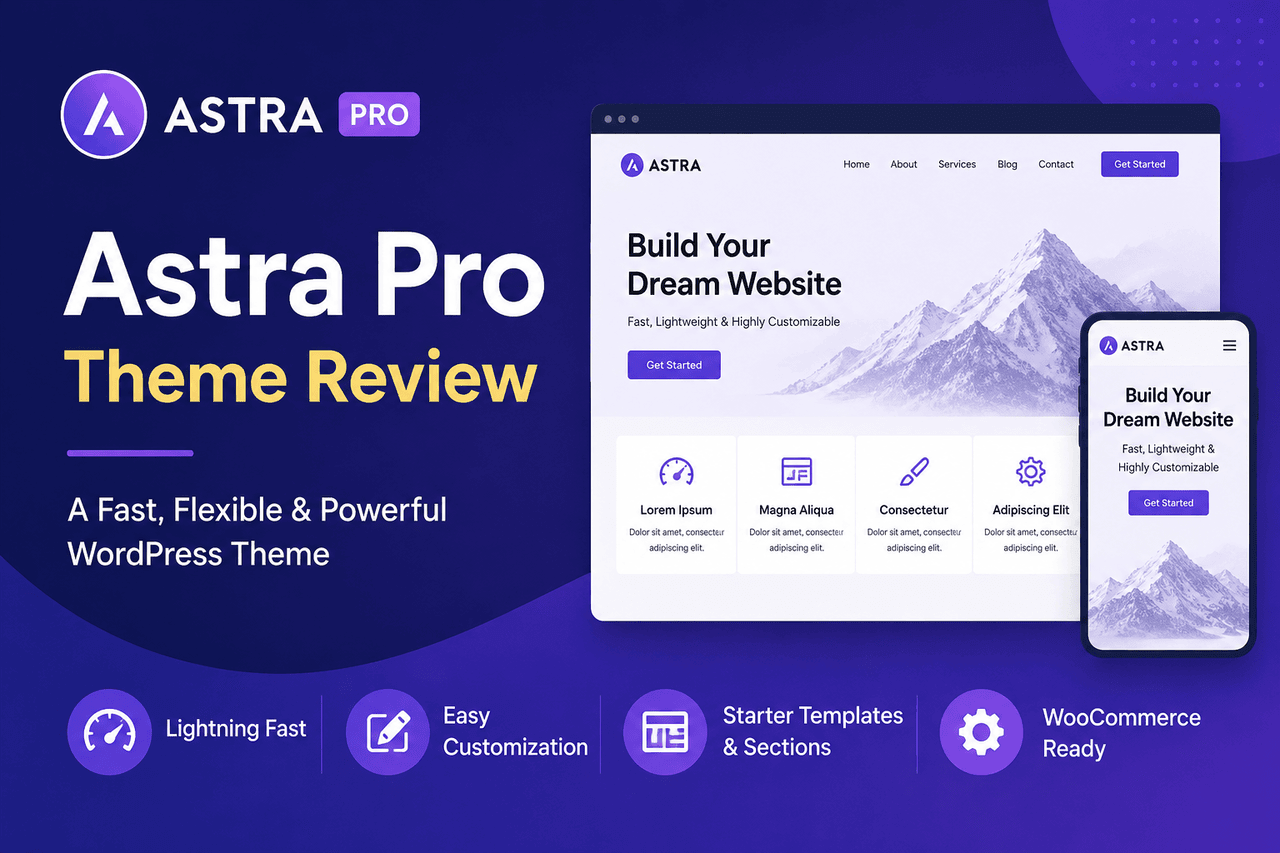
Astra is one of the most popular WordPress themes worldwide. It is a lightweight, highly customizable theme that works seamlessly with all major page builders.
Pros: Astra loads in under half a second on default settings. It offers deep integration with Elementor and WooCommerce, and it provides hundreds of pre-built starter templates.
Cons: The sheer number of customisation options can feel overwhelming for complete beginners. Many of the best features require purchasing the premium “Pro” version.
Best for: Beginners who want a fast, versatile foundation, and marketers building sites across multiple diverse niches.
2. GeneratePress
GeneratePress focuses entirely on performance and clean code. It is a foundational theme that provides a highly secure, fast-loading foundation for any type of website.
Pros: The theme is incredibly lightweight, adding less than 10 KB to your page size. It boasts perfect accessibility scores and offers exceptional stability.
Cons: Out of the box, GeneratePress looks very plain. It requires more manual customisation or a premium module to achieve a highly stylised look compared to Astra.
Best for: Speed-focused users, developers, and marketers who prefer to build their designs from scratch using the WordPress block editor.
3. Kadence Theme
Kadence is a newer entrant to the WordPress theme space, but it has quickly gained a massive following for its deep integration with the default WordPress Gutenberg editor.
Pros: Kadence offers a drag-and-drop header and footer builder that is incredibly intuitive. It features excellent global colour palettes, fast load times, and beautiful starter templates.
Cons: Because it is relatively new compared to Astra and GeneratePress, it has a slightly smaller community for third-party troubleshooting.
Best for: Fans of the Gutenberg block editor and marketers seeking modern, easy-to-use customisation features without relying on heavy page builders.
4. ReHub
ReHub is a specialised theme built specifically for profit-generating websites. It acts as a hybrid theme, combining magazine layouts, directory features, and deep e-commerce integrations.
Pros: ReHub includes dedicated affiliate features out of the box. You get advanced comparison tables, top-list builders, price drop trackers, and multi-vendor support.
Cons: The theme is very feature-heavy, which can result in a steep learning curve and slightly slower out-of-the-box load times if not configured correctly.
Best for: Dedicated product review sites, price comparison websites, and heavy e-commerce affiliate marketers.
5. Affiliate Booster
Affiliate Booster is exactly what its name suggests. It is a theme created by an affiliate marketer, for affiliate marketers, with a strict focus on improving conversion rates.
Pros: It includes built-in conversion blocks like pros and cons lists, star ratings, and notice blocks. You do not need additional plugins to create high-converting product showcases.
Cons: The design flexibility is limited compared to general-purpose themes like Astra. The aesthetic is highly focused on traditional affiliate blog layouts.
Best for: Dedicated affiliate marketers who want built-in conversion tools without installing a dozen third-party plugins.
6. Punte
Punte is a versatile, multipurpose WordPress theme that integrates smoothly with Elementor to help you build visually appealing affiliate sites.
Pros: Punte is highly versatile and comes with a wide variety of starter demos. It is fully responsive and offers strong integration with WooCommerce.
Cons: It is a general-purpose theme, so you will need to add your own plugins for specific affiliate features, such as comparison tables.
Best for: General affiliate bloggers and marketers who heavily rely on Elementor for their site design.
7. OceanWP
OceanWP is a highly extensible theme that excels in e-commerce environments. It offers a premium feel and a massive library of extensions.
Pros: The theme is fully e-commerce ready and looks highly professional. It offers excellent responsive design controls and a wide array of premium extensions to add functionality.
Cons: OceanWP relies heavily on these extensions. Installing too many can bloat your site and slow down your loading speeds.
Best for: E-commerce affiliates and marketers who need a specific, feature-rich store layout alongside their blog.
8. Digitalis
Digitalis is a clean, modern theme designed primarily for digital product reviews, software showcases, and tech blogs.
Pros: It features a crisp, clean design that highlights tech products well. It includes built-in review features and a strong focus on readability.
Cons: The design is highly niche-specific. It works well for software or electronics, but it might look out of place for a lifestyle or fashion affiliate site.
Best for: Digital product affiliates, software reviewers, and tech-focused blog publishers.
How do you choose the right WordPress theme for your niche?
Selecting the best theme from a list of top performers requires you to examine your specific business model. A theme that works perfectly for a fashion blogger might fail for a software review site.
First, consider your specific affiliate products and services. If you review physical products like camping gear or electronics, you need a theme that supports high-resolution image galleries and detailed comparison tables. ReHub or Affiliate Booster serve this need well. If you promote digital services or software, a clean, text-heavy layout like GeneratePress or Digitalis will keep the reader’s focus on your written analysis.
Next, evaluate your budget. Most of the themes on this list offer a free version, but the free versions usually lock away the most valuable features. The premium versions typically cost between $50 and $100 per year. If you are just starting, you can begin with the free version of Astra or Kadence. Once your site generates income, you can upgrade to the premium tier to unlock advanced customisation and better support.
Finally, consider your technical expertise. If you do not want to touch code or deal with complex settings, choose a theme with excellent starter templates, such as Astra. If you prefer to meticulously build every aspect of your site’s performance, GeneratePress provides the perfect blank canvas.
Making your final theme selection
The WordPress theme you choose dictates how easily you can build your site and how effectively it converts visitors into buyers. Themes like Astra and GeneratePress offer incredible speed and flexibility, making them safe choices for almost any niche. Meanwhile, specialised options like ReHub provide the exact tools needed for complex comparison sites.
Take the time to test the free versions of your top two choices. Install them on a staging site, import a demo, and see how the customisation tools feel. By choosing a fast, reliable, and conversion-focused theme today, you set your affiliate marketing business up for long-term success.
Frequently Asked Questions (FAQ)
Are free WordPress themes good enough for affiliate marketing?
Free themes can work well when you are first launching your site and need to keep costs low. However, free themes usually limit your customisation options and lack premium support. As your traffic grows, you will likely need to upgrade to a premium theme to access better conversion tools, faster performance optimisations, and dedicated developer support.
Will changing my WordPress theme affect my SEO?
Yes, changing your theme can affect your SEO. A new theme might affect your site’s loading speed, mobile responsiveness, and underlying HTML structure (such as heading tags). If you switch to a faster, cleaner theme like GeneratePress, your SEO might improve. If you switch to a bloated, slow theme, your rankings could drop. Always test a new theme on a staging site before making it live.
Do I need a page builder if I buy a premium theme?
You do not strictly need a page builder. Modern WordPress themes, particularly Kadence and GeneratePress, integrate deeply with the default WordPress block editor (Gutenberg). You can build beautiful, fast-loading layouts using only blocks. However, page builders like Elementor offer a more visual, drag-and-drop experience that many beginners find easier to use.
What is the difference between an affiliate theme and a standard blog theme?
A standard blog theme focuses on displaying articles in a chronological feed. An affiliate theme includes specific features designed to drive sales. These features often include built-in product review boxes, star rating systems, comparison tables, and prominent buttons for affiliate links.
How much should I expect to pay for a premium WordPress theme?
A premium WordPress theme usually costs between $50 and $100 per year for a single-site license. This annual fee grants you access to theme updates and developer support. Some developers also offer a lifetime license, which typically costs between $200 and $300 and removes the need for annual renewals.