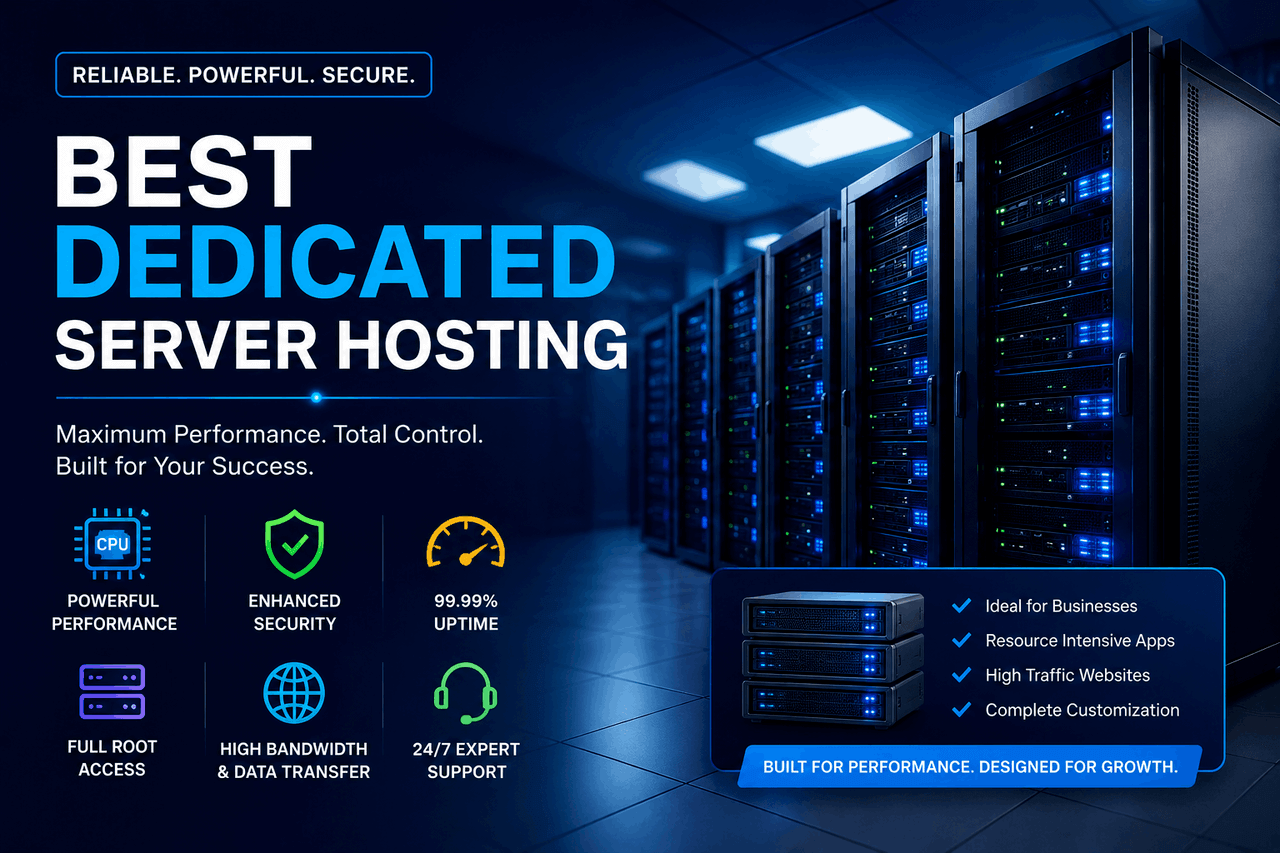
The best dedicated server hosting gives you an entire physical server dedicated to your website or application. This setup provides unmatched speed, security, and control. Liquid Web, InMotion Hosting, and A2 Hosting are the top provider choices. Choose a dedicated server if your e-commerce store or enterprise site outgrows shared hosting and requires maximum performance.
In the world of web hosting, shared hosting is like renting a room in a crowded apartment. You share resources with everyone else. If one roommate uses all the hot water, your shower goes cold. Dedicated server hosting is like owning a single-family home. You have the entire property to yourself. You control the plumbing, the electricity, and the locks on the doors.
When your website grows to a certain size, that single-family home becomes a necessity. High-traffic websites consume vast amounts of bandwidth and memory. If you run a large e-commerce store or a media-heavy publication, a shared environment will eventually slow you down. A slow website frustrates visitors and drives away potential buyers.
Dedicated server hosting solves this problem by giving you an entire physical server. You do not share processor power, memory, or storage with any other business. You get complete access to the server’s resources. This means faster page load times, tighter security, and the ability to customize the server environment to your exact specifications.
Moving to a dedicated server is a major step. It requires a higher budget and, often, more technical knowledge. This guide will walk you through exactly what you need to know about dedicated hosting, how to choose the right provider, and what to expect when you make the transition.
What are the benefits of using a dedicated server?
A dedicated server provides clear advantages for growing businesses. You gain control, speed, and safety. These benefits come at a higher cost, but they protect your revenue when traffic spikes.
First, you receive unmatched server performance. Shared hosting limits your access to the central processing unit and memory. A dedicated server dedicates 100% of its processing power to your website. If your marketing campaign goes viral, your site will not crash because another company on your server had a traffic spike. Your site handles the traffic smoothly.
Second, you gain complete control over your server environment. With a dedicated server, you have root access. This means you can install custom software, configure the operating system, and set specific server limits. You configure the server to run exactly the way your application requires.
Finally, your security improves dramatically. You are the only user on a dedicated server. You do not have to worry about the security practices of a neighboring website. If another company on a shared server gets hacked, your site might be vulnerable. On a dedicated server, you build your own firewall rules and security protocols.
What should you look for when choosing a dedicated hosting provider?
Choosing a dedicated hosting provider requires careful evaluation of your current needs and your future growth. You need a partner that provides reliable hardware and responsive support.
How easily can you scale your server resources?
Your server needs will change as your business grows. You want a hosting provider that lets you add more RAM or storage without significant downtime. Look for providers that offer quick hardware upgrades.
What level of technical support is available?
Server issues happen. When a server goes down, you lose money. You need a provider that offers 24/7 technical support by phone, chat, and email. Check if the hosting provider has support staff physically located in the same data center as your server. On-site staff can physically inspect your machine if a hardware failure occurs.
What is the provider’s server uptime guarantee?
Uptime is the percentage of time your server remains online and accessible. You should look for an uptime guarantee of at least 99.9%. Providers achieve high uptime by using redundant power supplies and multiple network connections. If one connection fails, the backup takes over immediately.
How is the server pricing structured?
Dedicated servers represent a significant financial investment. A single server usually costs around $100 to $500 per month, depending on the hardware. Pay close attention to the renewal rates. Some providers offer low introductory prices that double after the first year. Read the fine print to understand the long-term cost.
Which companies offer the best dedicated server hosting?
The dedicated server hosting market is crowded. Finding the right fit depends on your budget and your need for managed services. Here is a look at three highly regarded hosting providers.
Liquid Web
Overview: Liquid Web specializes in high-end, fully managed dedicated server hosting. They build custom servers for complex applications and high-traffic websites.
Who is this for? Liquid Web is ideal for large e-commerce businesses and enterprise organizations that need white-glove support. If you do not have an in-house server administrator, Liquid Web handles the technical maintenance for you.
Risks: The premium service comes with a premium price tag. Liquid Web is significantly more expensive than entry-level dedicated hosting providers.
Rewards: You receive exceptional customer support. Liquid Web guarantees a 59-second initial response time for phone and chat support. Their managed services cover operating system updates, security patches, and proactive server monitoring.
InMotion Hosting
Overview: InMotion Hosting offers a balance of affordability and performance. Their dedicated servers include solid-state drives and a choice of managed or unmanaged setups.
Who is this for? InMotion Hosting works well for growing businesses and digital agencies. If you are upgrading from a virtual private server and want a reliable physical server without breaking the bank, this is a strong choice.
Risks: The initial setup process can take longer than with other providers. They conduct a manual verification process for new dedicated server orders to prevent fraud.
Rewards: You get excellent hardware for the price. InMotion Hosting includes generous bandwidth and offers a 30-day money-back guarantee, which is rare for dedicated servers.
A2 Hosting
Overview: A2 Hosting focuses entirely on server speed. Their unmanaged dedicated servers are highly customizable, giving developers complete freedom over the command line.
Who is this for? A2 Hosting is built for experienced developers and system administrators. If you know exactly how to configure a Linux server from scratch, A2 Hosting provides the raw power you need.
Risks: The unmanaged plans offer no software support. If you misconfigure your firewall or crash your database, A2 Hosting will not fix it for you. You are entirely responsible for the server’s health.
Rewards: You pay much less because you don’t pay for technical support. A2 Hosting also offers high-performance NVMe storage options, which read and write data incredibly fast.
Who actually needs dedicated server hosting?
Not every website needs a dedicated server. Small blogs and local business websites run perfectly fine on shared hosting. But specific types of businesses require the power of a dedicated machine.
Large e-commerce stores benefit greatly from dedicated hosting. During major sales events, an e-commerce site receives a massive influx of visitors. A dedicated server ensures the checkout process remains fast and secure. Slow load times lead to abandoned shopping carts and lost revenue.
Enterprise organizations use dedicated servers to host internal applications and sensitive databases. A dedicated environment allows a large corporation to meet strict compliance and data privacy regulations. You can encrypt the entire server to protect customer data.
Digital marketing and web development agencies use dedicated servers to host multiple client websites. Instead of buying dozens of separate shared hosting plans, an agency rents one powerful dedicated server. They partition the server to give each client its own secure environment.
How do you migrate to a dedicated server?
Moving your website to a dedicated server requires planning. A rushed migration can lead to broken links, missing data, and prolonged downtime.
First, you need to back up your current website. You must download a complete copy of your files, your databases, and your email accounts. Store this backup on a local hard drive or a secure cloud storage service.
Next, you set up the new dedicated server. You will configure the operating system, install the web server software, and set up your database management system. If you purchased a managed server, your hosting provider will handle this step for you.
After the server is ready, you upload your website files and import your databases. You then test the website on the new server using a temporary URL. You must click through your pages, test your contact forms, and verify that your checkout process works.
Finally, you update your domain name system records. You point your domain name to the Internet Protocol address of your new dedicated server. This process can take up to 48 hours to propagate across the internet. During this time, you should keep your old hosting account active to prevent downtime.
What advanced dedicated server features matter most?
When evaluating dedicated servers, the basic specifications are just the starting point. Advanced features separate good hosting providers from great ones.
Customization is a major factor. Some hosting providers let you choose the exact processor brand, the speed of the memory, and the physical configuration of the hard drives. Choose highly customizable servers if you run specialized database software that requires a specific hardware setup.
Managed services save you time. Server administration is a full-time job. Managed dedicated servers include software updates, security audits, and automated backups. Choose a managed server if you want to focus on running your business instead of managing server patches.
Security protocols keep your server safe from attacks. Advanced providers offer hardware firewalls that filter malicious traffic before it reaches your server. They also offer distributed denial-of-service protection. This protection absorbs massive floods of fake traffic, keeping your website online during a targeted attack.
Is dedicated server hosting right for your business?
Dedicated server hosting is a serious commitment. It requires a larger budget and a solid understanding of your website’s technical needs. But for websites that have outgrown shared environments, it is a necessary investment.
A dedicated server gives you the physical resources to handle massive traffic spikes. It gives you the control to customize your server environment. It provides the security to protect your sensitive data.
If your website generates significant revenue, the cost of a dedicated server is easily justified. You are buying peace of mind. You know that your website runs on a powerful, isolated machine under your complete control.
FAQs about dedicated server hosting
What is the difference between a dedicated server and a virtual private server?
A dedicated server gives you an entire physical machine. A virtual private server (VPS) partitions a single physical machine into multiple virtual servers. A virtual private server is cheaper, but a dedicated server offers far more processing power and total isolation.
Do I need to know how to code to use a dedicated server?
You do not need to know how to code if you purchase a managed dedicated server. The hosting provider handles the technical configuration. If you purchase an unmanaged server, you must know how to use command-line interfaces and configure server software.
How much does a dedicated server cost per month?
A dedicated server usually costs between $100 and $500 per month. The price depends on processing power, memory, and whether the server includes managed technical support.
Can I upgrade my dedicated server later?
Yes, you can usually upgrade the hardware on a dedicated server. You can ask the hosting provider to install more memory or larger hard drives. Be aware that physical hardware upgrades require the server to be temporarily powered down.
Is a dedicated server better for search engine optimization?
A dedicated server can improve your search engine optimization by providing faster page load times. Search engines favor websites that load quickly. Additionally, a dedicated server gives you a unique Internet Protocol address, separating your site’s reputation from other websites.